Views: 0 Author: Site Editor Publish Time: 2026-06-19 Origin: Site


Tackling steep inclines and rocky banks with a compact tractor is a high-stakes reality. Operators face severe risks every day, ranging from catastrophic rollover accidents to significant equipment damage. When standard brush hogs fail to handle extreme grades safely, you need a specialized alternative. Enter the Sickle Bar Mower, which serves as the optimal solution for these hazardous conditions. It provides extended lateral reach, demands very low horsepower, and effortlessly cuts at severe downward angles. You can keep your tractor safely planted on stable, level ground while the implement reaches down the embankment to do the heavy work. Our goal in this article is clear. We provide a realistic, spec-driven framework to help you evaluate and shortlist the right mower configuration for difficult terrain. You will learn exactly what specifications to prioritize, ensuring you keep both your machinery and your operators safe.
Weight distribution is critical: Compact tractors require strict adherence to 3-point hitch lift capacities and front counter-ballasting to safely operate an offset sickle bar on slopes.
Breakaway protection is non-negotiable: Rocky terrain guarantees impacts; spring-loaded or hydraulic breakaway mechanisms are required to prevent catastrophic frame or cutter bar damage.
Double-action vs. Single-action: Double-action sickle bars reduce vibration, which minimizes wear on lighter compact tractor chassis.
Vetting the source: Choosing a reliable Sickle Bar Mower manufacturer with accessible replacement parts (guards, sections, rivets) matters more than initial purchase price for high-impact environments.
Operating a tractor on sloped, unpredictable terrain fundamentally changes how you must approach vegetation management. Traditional mowing implements often become liabilities when introduced to rocky ditches or steep embankments. Understanding why conventional tools fail helps clarify why specialized equipment becomes necessary.
Many operators default to rotary or flail mowers for general property maintenance. However, these machines present significant dangers in steep, rocky environments. We can break their failures down into three primary categories:
High-Velocity Projectiles: Rotary blades spin at massive RPMs. When these heavy blades strike hidden rocks, they turn them into lethal projectiles. This creates unacceptable risks for the operator, nearby windows, and passing vehicles.
Center of Gravity Hazards: Flail and rotary mowers carry massive rear-mounted weight. Carrying this weight directly behind the tractor raises its center of gravity. This physical shift dramatically increases the risk of a rear or lateral rollover when navigating steep inclines.
Restricted Cutting Angles: Traditional mowers operate strictly parallel to the tractor axles. They cannot effectively reach down into deep drainage ditches or trim over raised embankments. You must drive the tractor directly onto the hazard to mow it.
Sickle units offer a fundamentally different mechanical approach. They solve the unique challenges of rough terrain through their distinct operational design. Here is why they excel in these harsh environments:
Low RPM Scissor Action: The cutter bar uses a back-and-forth shearing motion rather than high-speed rotary impacts. This scissor-like action drastically reduces projectile hazards. When the teeth meet a rock, they generally jam or stall rather than launch the debris into the air.
Extended Lateral Reach: These mowers extend sideways from the tractor. This allows the compact tractor to remain on stable, flat ground. Meanwhile, the cutter bar extends outward to manage the sloped vegetation safely.
Minimal Power Draw: Rotary mowers demand immense Power Take-Off (PTO) horsepower to maintain blade momentum. Sickle bars require very little PTO power. This preserves your engine power for essential tractor traction and mobility on loose soil.
Matching an implement to a compact tractor requires careful attention to specifications. You cannot simply attach the widest cutter bar available. You must evaluate the implement against your tractor's structural limits and the realities of your terrain.
You must evaluate the specific implement weight against your tractor’s exact structural limits. Sub-compact machines, such as the Kubota BX series, have narrow wheelbases and lightweight frames. They behave very differently than standard compacts under side loads.
An offset cutter bar creates significant lateral drag. The implement constantly pulls the tractor toward the slope. You must counteract this leverage. Installing rear wheel weights or utilizing a heavy front loader bucket is mandatory. Proper ballasting keeps all four tires firmly planted, ensuring the steering axle maintains traction when lifting the heavy offset implement.
Rocky terrain guarantees eventual impacts. Hidden fieldstones and buried concrete will test your equipment. You need a robust defense mechanism to prevent catastrophic frame damage.
Mechanical Spring Breakaway: This is a highly recommended, cost-effective safety feature. A heavy tension spring holds the bar in position. When the cutter strikes a hidden rock, the latch releases, allowing the bar to swing backward. The operator simply reverses the tractor to snap the mechanism back into its working position.
Hydraulic Breakaway: Premium models offer hydraulic protection. These systems either auto-reset after an impact or allow you to lift the cutter bar over obstacles directly from the cab. While they carry a higher upfront cost, they are exceptional for areas with extreme rock density.
Versatility comes from articulation. The best implements handle various grades without forcing the tractor into dangerous positions. Look for models capable of operating anywhere from +90 degrees to -45 degrees.
A +90-degree capability allows for vertical transport. It also enables you to trim tall hedges and overgrown tree lines. A -45-degree downward angle is vital for reaching deep ditch banks and pond edges while keeping your tires on flat ground.
The cutting mechanism dictates your maintenance schedule, vibration levels, and cutting speed. You generally choose between two primary mechanical designs.
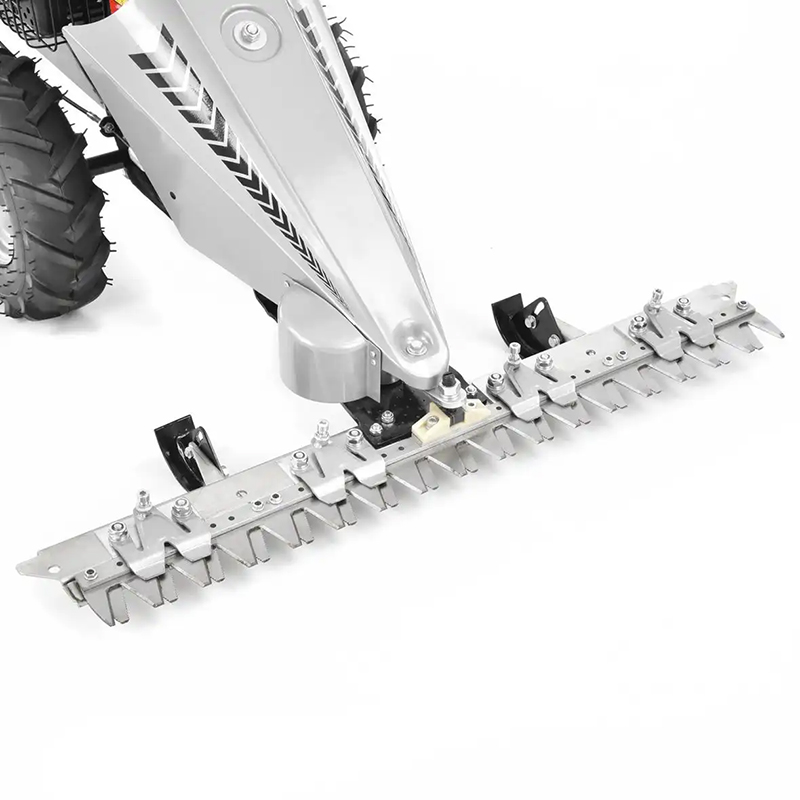
Single-action: In this setup, only the toothed blade moves. The stationary guard bar remains still. These are cheaper to buy and simpler to maintain. However, they transfer much higher vibration back into the tractor chassis.
Double-action: Both the toothed blade and the guard bar move in opposite directions simultaneously. This counter-movement cancels out harmonic resonance. It transfers significantly less vibration to a lightweight compact tractor. It also cuts faster and clogs less in thick, wet brush.
Feature | Single-Action Mechanics | Double-Action Mechanics |
|---|---|---|
Moving Parts | Knife blade only | Knife blade and guard bar |
Vibration Output | High (shakes lightweight frames) | Low (counter-movement balances vibration) |
Brush Clearing | Prone to occasional clogging | Cuts aggressively, clears debris quickly |
Maintenance Complexity | Simple, fewer moving components | Slightly complex, requires precise timing |
Purchasing agricultural machinery is a long-term commitment. In high-impact environments, the metal will bend, and teeth will eventually break. How you recover from these inevitable breakdowns depends entirely on the brand you choose.
Rocks will inevitably break sickle sections (the triangular teeth) and rock guards. You should expect this and plan accordingly. Evaluate the manufacturer’s aftermarket parts availability before finalizing a purchase. The best equipment uses standard OEM or universally sized rivets and teeth. A reliable Sickle Bar Mower manufacturer ensures you can source these consumable parts easily. If a brand forces you to order proprietary bolts from overseas with a six-week lead time, your mowing season will suffer.
Marketing brochures often promise the world. You must scrutinize warranties covering the vital components. Focus your attention on the gearbox, the pitman arm, and the hydraulic cylinders. Avoid brands making unverifiable "indestructible" claims. High-quality builders transparently state their shear pin ratings and breakaway tolerances. They back their structural steel with straightforward, easy-to-read warranties rather than flashy buzzwords.
Buying the wrong size implement creates a massive safety hazard. A reputable Sickle Bar Mower manufacturer or dealer will refuse to sell you a product blindly. They will require your tractor's exact model, tire width, curb weight, and PTO specifications before approving a sale. They do this to ensure the implement's offset weight will not flip your specific machine. Exceptional customer support begins with safety-first implement matching.
Owning the right equipment is only half the equation. Operating it safely on treacherous terrain requires strict adherence to physical limits and maintenance routines.
Operators often underestimate the physical shift in balance when repositioning the mower. Imagine mowing a ditch at a -45 degree angle while parked on a slight slope. Lifting the heavy cutter bar back to a horizontal transport position aggressively shifts the tractor's center of gravity uphill. If your tires sit on soft soil, this sudden weight transfer can destabilize the tractor. You must always move the hydraulics slowly. Plan your lifting movements when the tractor sits securely on level patches of ground.
Speed is your enemy in rocky terrain. Many operators make the mistake of running their tractor in a high gear. This reduces your reaction time dramatically. Best practices dictate operating in low gear ranges (often labeled as Low or Turtle). Moving slowly allows you sufficient time to disengage the clutch when you spot a hidden boulder. Furthermore, you do not need to run your PTO at maximum RPM. These mowers operate efficiently at moderate speeds. Lower speeds reduce the severity of impact when the cutter bar inevitably encounters heavy rock concentrations.
Rough terrain exacts a heavy toll on moving parts. You cannot treat this implement like a maintenance-free rotary cutter. You must carry a dedicated field-repair kit in your tractor cab. This kit should include extra sickle sections, spare rivets, a sturdy hammer, and a heavy-duty punch. Fixing a broken tooth in the field takes five minutes if you have the right tools. Furthermore, daily lubrication is mandatory. You must grease the pitman arm or wobble box bearings before every single shift. Failure to lubricate these high-friction points will destroy the drive mechanism within a few hours of hard use.
Mowing steep, rocky terrain demands specialized equipment and extreme caution. You must prioritize an implement designed specifically for these punishing environments. When evaluating your options, focus on a reliable breakaway mechanism to protect your investment from fieldstone impacts. Ensure you choose a manageable implement weight that safely matches your specific compact tractor frame. If your budget allows, always opt for a double-action cutter bar to reduce structural vibration and speed up your workflow.
Your next steps require precise measurements. First, measure your tractor's rear track width to understand your stability footprint. Second, verify your exact 3-point hitch lift capacity in your owner's manual. Finally, contact your shortlisted dealers and request their parts availability data for consumable components like teeth and guards. Taking these steps ensures you buy a machine that will perform safely for years.
A: Yes, but size is severely limited. You must usually stick to 3.5 to 5-foot bars max. The limitation is not PTO horsepower, as these mowers require very little power. The primary constraint is lateral weight tipping risks. Sub-compacts have narrow wheelbases and struggle to counterbalance the heavy side-reach of larger bars.
A: If equipped with a breakaway latch, the bar swings backward to prevent damage. The operator stops the PTO, reverses the tractor to snap the bar back into place, and resumes cutting. Without this crucial feature, hitting a heavy rock will permanently bend the frame or shatter the drive arm.
A: They handle thick grasses, heavy weeds, and light saplings easily. Typically, they shear saplings up to 1 inch in diameter without stalling. However, they are not designed for heavy forestry mulching, thick woody clearing, or processing dense hardwood thickets.
A: Due to their offset center of gravity, they can be notoriously difficult to align. The implement naturally wants to lean to one side when unhooked. Quick-hitch compatibility or using a custom block and dolly system in the barn is highly recommended for safe, frustration-free mounting.


