Views: 0 Author: Site Editor Publish Time: 2026-06-26 Origin: Site


Processing 18-inch logs introduces a brutal physical threshold for anyone cutting their own firewood. A single green oak or hickory round of this massive diameter can easily weigh between 100 and 150 pounds. This intense weight shifts your entire decision context. For homeowners and homesteaders, splitting firewood isn't just about raw machine speed or maximum output. The process strictly becomes a matter of operator endurance and injury prevention. Choosing the right equipment requires balancing cycle-time efficiency against the harsh physiological cost of lifting heavy rounds repeatedly. This reality makes the horizontal versus vertical debate a fundamental question of human ergonomics rather than just machine mechanics. You will discover exactly how to evaluate tonnage, cycle speeds, and structural designs to process large hardwoods safely. We will break down why selecting the right machine fundamentally protects your back and extends your working stamina.
Lifting Risk: Strictly horizontal splitters require deadlifting every log to waist height, making them unsustainable for continuous 18-inch round processing.
The Vertical Advantage: Vertical (and dual-position) splitters allow operators to roll 18-inch logs directly onto the splitting plate, eliminating heavy lifting.
Tonnage Reality: For 18-inch hardwoods, a 20-to-25-ton capacity is the baseline for reliable, stall-free homeowner use.
Cycle Speed: Horizontal machines often feature slightly faster cycle times and auto-return functionality, better suited for high-volume processing of smaller, pre-split wood.
The physics of firewood demand serious respect before you even start the engine. Let us look at the actual weight of an 18-inch diameter hardwood log cut to standard 16-inch lengths. Wood density varies widely, but green hardwoods hold immense water weight. A green white oak log of these dimensions weighs roughly 120 pounds. You might lift this weight hundreds of times during a single weekend session. Deadlifting 120 pounds repeatedly over a two-hour period leads to rapid muscle fatigue. It drastically increases your risk of severe lumbar strain or a blown spinal disc.
Homeowners face vastly different constraints than professional logging operations. Commercial crews utilize skid steers equipped with grapples or integrated hydraulic log lifts. You likely rely entirely on manual handling. The true success metric for residential use isn't simply "cords per hour." Your primary goal must always be "cords processed without injury." Chasing pure speed while sacrificing your physical health defeats the purpose of heating your home independently.
You also need specific tonnage minimums to process this size of wood effectively. A 15-ton machine can successfully cleave clear, straight-grained 18-inch logs like ash or pine. However, knotty or green wood at this diameter presents a much tougher mechanical challenge. Elm, oak, and maple fibers interlace tightly around branch knots. You need 20 to 25 tons of splitting force to break through these stubborn rounds safely. This capacity prevents annoying hydraulic stalling. It also reduces premature equipment wear on the pump and cylinder. Finding the right log splitter requires matching this tonnage requirement perfectly to your typical wood supply.
Estimated Weight of 18-Inch Diameter Wood Rounds (16-Inch Length)
Wood Species | Condition | Approximate Weight (lbs) |
|---|---|---|
White Oak | Green (Freshly Cut) | 120 - 135 lbs |
Hickory | Green (Freshly Cut) | 125 - 140 lbs |
Sugar Maple | Green (Freshly Cut) | 110 - 125 lbs |
White Pine | Green (Freshly Cut) | 60 - 75 lbs |
Mixed Hardwood | Seasoned (Dry) | 80 - 95 lbs |
Understanding how purely horizontal machines work helps clarify their specific use cases. You lift logs manually onto a waist-high steel I-beam. The hydraulic ram extends horizontally along the beam. It pushes the log directly into a stationary steel wedge, or sometimes pushes the wedge directly into the log. Catch trays securely hold the split halves. This prevents the split pieces from dropping into the dirt, saving you from bending over to retrieve them.
These machines deliver distinct performance strengths. They typically offer faster cycle times than their vertical counterparts. Horizontal models shine brightly when you need to re-split already halved logs. They process smaller rounds rapidly. You can easily manage pieces under 12 inches in diameter at a blazing pace. Auto-return valves retract the ram automatically, letting you grab the next piece of wood while the machine resets.
However, heavy 18-inch rounds expose the massive bottleneck of this design. Hoisting massive wood blocks creates severe physical strain on the operator. Budget homeowner models rarely include separate mechanical log lifts. Horizontal-only machines quickly become a physical liability for heavy hardwood processing. You waste tremendous energy just staging the wood before the machine does any actual work.
We reserve these purely horizontal machines for specific situations. They work beautifully if you strictly process smaller cordwood or softwoods. They also make perfect sense if you own support equipment. Using a compact tractor bucket to load heavy rounds directly onto the waist-high beam saves your back completely. Without mechanical loading assistance, processing 18-inch rounds on a fixed horizontal beam remains an exhausting endeavor.
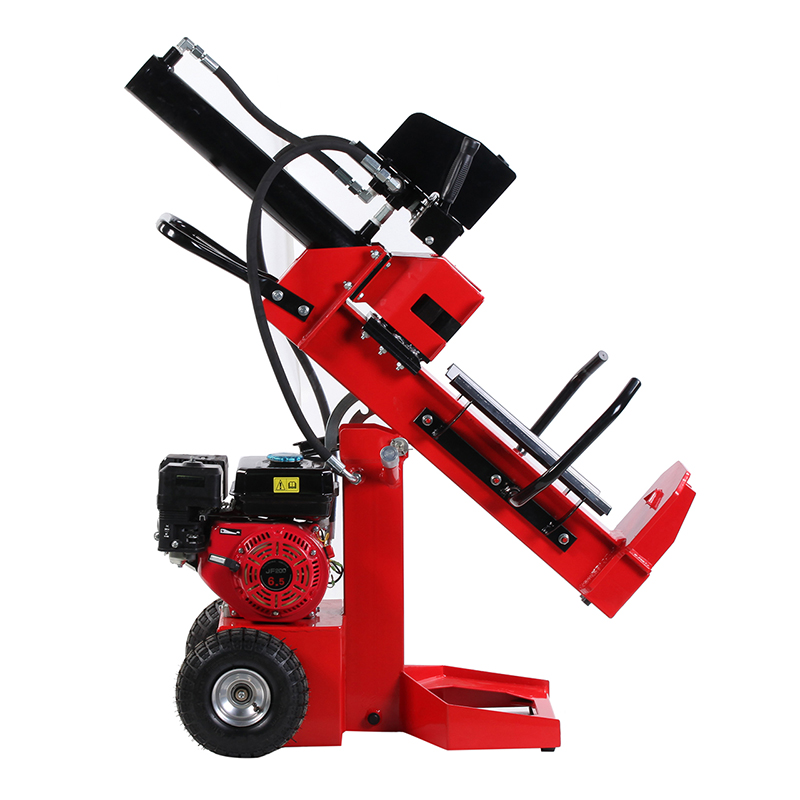
Operating in the vertical position changes the entire physics of firewood processing. This setup offers the ultimate "roll-on" solution. The main steel beam pivots downward to rest securely on the ground. You simply pivot or roll an 18-inch, 150-pound log directly onto the heavy steel footplate under the wedge. This motion entirely eliminates heavy deadlifting from your workflow.
Vertical splitting does introduce unique operational trade-offs. You often work much closer to the ground. You might find yourself kneeling constantly or sitting awkwardly on a low stool. Furthermore, split pieces fall directly onto the footplate area. Clearing these irregular pieces from around your boots slows down your overall cycle times. The wedge also operates close to your feet, requiring hyper-vigilant safety practices.
Dual-position flexibility solves many of these workflow issues. Horizontal and vertical combo units serve as the gold standard for modern homesteaders. You utilize a specific workflow for maximum efficiency:
Stage One (Vertical): Leave the beam locked in the vertical position. Roll massive 18-inch rounds onto the base plate. Cleave these heavy rounds into manageable halves or quarters.
Stage Two (Transition): Push the lighter quarters aside. Pull the release pin and pivot the heavy steel beam back into the horizontal locking position.
Stage Three (Horizontal Finishing): Lift the lighter, pre-split quarters onto the waist-high beam. Rapidly process these pieces into final stove-sized firewood using the faster horizontal cycle.
This design represents the necessary choice for most serious users. Anyone dealing regularly with 18-inch or larger hardwoods needs this mechanical flexibility. Aging operators or solo workers should always prioritize this safety over maximum cycle speed.
You must frame the trade-off between cycle time and operator fatigue very clearly. A horizontal machine might boast a blistering 10-second cycle time. This impressive speed becomes utterly useless if you require a five-minute rest break after deadlifting just three heavy logs. True efficiency blends raw machine speed with sustainable operator stamina.
You must carefully evaluate power plants and hydraulic systems. Excellent options include gas-powered Honda or Kohler engines, robust 220V electric motors, or tractor 3-point PTO systems. Large 18-inch logs demand serious hydraulic flow rates. We measure this in gallons per minute (GPM). A high flow rate utilizing a two-stage pump prevents annoying engine stalls. The pump delivers high volume for fast ram movement, then automatically shifts to low volume and high pressure when hitting a tough knot. Gas engines or heavy-duty PTO setups generally provide the best GPM figures for stubborn, large-diameter hardwoods.
Tonnage is simply a byproduct of cylinder diameter and hydraulic pressure. We strongly warn against cheap models. Some brands wildly overstate their tonnage capabilities. They utilize thin, high-pressure cylinders heavily prone to sudden seal failure under lateral stress. Look for thick steel cylinder walls, robust trunnion mounts, and heavy-duty welded I-beams. The main beam must resist twisting forces when a knotty 18-inch log tries to force the wedge sideways.
Consider the physical footprint and towability of the machine. Combo units are naturally heavier due to the pivoting hardware. They require proper towing hitches, DOT-approved tires, and balanced axles for safe transport. Moving a 600-pound machine by hand across a muddy property is nearly impossible. Ensure your selected model balances well on its wheels when detached from a vehicle.
Supply chain realities dictate much of the current outdoor power equipment market. Many big-box store machines look remarkably identical underneath their plastic shrouds. They often share exactly the same imported hydraulic pumps, valves, and cylinders. Brands simply paint them different colors and apply aggressive marketing stickers.
The true differentiator is post-purchase support. Choosing a dedicated log splitter manufacturer guarantees much better long-term reliability. Evaluate them based strictly on their parts catalog availability. You need immediate, frictionless access to replacement hydraulic filters, high-pressure hoses, and internal cylinder seals. A trustworthy log splitter manufacturer openly publishes these part numbers and specifications online. They do not hide behind generic customer service portals.
Every piece of heavy equipment carries implementation risks. You must follow strict setup and maintenance protocols to protect your machinery.
Hydraulic fluid leaks: Respect the critical initial break-in period. You must manually check all factory hose fittings and valve connections for tightness before your first session, and again after ten hours of use.
Vibration loosening: Large single-cylinder engines vibrate violently. Apply medium-strength thread-locker to engine mount bolts and hydraulic pump couplers after processing your first cord of wood.
Storage degradation: Protect your equipment from the harsh elements. Uncovered storage leads to severe carburetor issues as ethanol gas absorbs atmospheric moisture. Sunlight also causes rapid UV degradation to exposed rubber hydraulic hoses. Always use a breathable, waterproof cover.
Review your typical wood delivery or felled trees carefully. If your logs average over 14 to 18 inches in diameter, your choice is exceptionally clear. A dual-position horizontal and vertical machine in the 25-ton range serves as the only logical, injury-free option. It saves your spine while providing the brute force needed for knotty hardwoods. Conversely, if you exclusively process smaller, 10-inch uniform rounds from a tree service, a horizontal model will save valuable time.
Assess your typical wood supply immediately. Honestly consult your own physical limitations before spending any money. Do you have the back strength to lift 120 pounds fifty times a day? Always prioritize transparent brands that openly publish their GPM pump specs and comprehensive warranty terms. Making the correct ergonomic choice today guarantees decades of comfortable, safe firewood processing for your homestead.
A: Conditionally. Yes, for dry, straight-grained wood like ash or pine. No, for green, knotty elm or oak—expect frequent hydraulic stalling. You will likely spend more time fighting stuck wood than actually splitting it.
A: They reduce lifting injuries significantly, saving your lower back. However, they introduce dangerous crushing hazards near the ground footplate. Split logs can fall directly onto your feet. Proper steel-toe boots are absolutely mandatory during vertical operation.
A: They require a heavier-duty steel pivot mechanism, reinforced locking pins, and a stronger base plate. They also need longer, flexible high-pressure hydraulic hoses to accommodate the continuous beam movement without crimping or leaking.


