Views: 0 Author: Site Editor Publish Time: 2026-06-11 Origin: Site


Operating a compact tractor on uneven terrain or steep embankments immediately rules out standard rotary cutters. You risk severe rollovers and constant ground scalping. Property owners face a persistent challenge. They need a safe, efficient way to clear tall, wiry grass and light brush. You must maintain steep banks, pond edges, and deep ditches safely. Traditional mowing decks strain your compact tractor’s power take-off. They also destabilize its center of gravity dangerously on inclines. We created this comprehensive guide to deconstruct your decision-making process. We evaluate core configurations and specific tractor compatibility requirements. We also detail the reality of field maintenance to keep your equipment running smoothly. You will learn how to select a specialized implement designed explicitly for this demanding work. This ensures you maintain your property efficiently without damaging your tractor or jeopardizing your safety.
Terrain Specialization: Sickle bar mowers are the optimal choice for steep angles (often articulating 90° up and 45° down) where rotary and flail mowers fail or pose safety hazards.
Power Efficiency: They require significantly lower Power Take-Off (PTO) horsepower compared to rotary cutters of the same width, making them ideal for compact and sub-compact tractors.
Vetting Matters: Parts availability is the primary bottleneck for ownership. Selecting a reliable sickle bar mower manufacturer with domestic parts distribution is more critical than initial purchase price.
Maintenance Reality: Buyers must accept a higher frequency of preventative maintenance (blade sharpening, rivet/bolt replacement, lubrication) in exchange for unmatched slope-clearing capabilities.
You cannot safely operate a compact tractor sideways across a steep ditch. The severe angle triggers an immediate rollover risk. A side-mounted cutter solves this dangerous problem entirely. It allows your tractor to remain safely parked or driven on flat, stable ground. Meanwhile, the cutting apparatus extends outward and downward over the difficult terrain. This physical separation between the heavy tractor chassis and the cutting zone ensures operator safety. Agricultural safety standards universally recommend against trailing heavy rotary decks over blind edges.
You also gain a massive power efficiency advantage. Shearing action requires minimal horsepower compared to blunt-force mulching. Rotary cutters smash material into pieces. Flail mowers pulverize stalks repeatedly. Both methods demand massive kinetic energy reserves. A shearing blade simply snips the stalk once. This efficiency allows a standard 25 to 35 HP compact tractor to easily run a large 6-foot or 7-foot cutter bar. The engine never bogs down or stalls, even in dense vegetation.
Material handling proves vastly superior in wet conditions. A Sickle Bar Mower cuts vegetation directly at the base. It leaves the severed material to fall flat naturally. You avoid the relentless clogging issues common with standard decks. Thick, wet, tall grass constantly wraps around rotary spindles. It burns belts and overheats gearboxes rapidly. The clean shearing action avoids material wrapping entirely, letting you work continuously through morning dew or damp marsh grass.
Driving parallel to a steep embankment rather than staying on the flat upper crest.
Using a heavy rear-mounted deck which acts as a pendulum, pulling the tractor downhill.
Ignoring hidden debris. Always walk the ditch line to remove loose wire or large stones before cutting.
When you begin evaluating different models, specific engineering choices dictate your future field performance. Pay close attention to lift mechanisms, safety systems, and sizing ratios to ensure seamless operation.
You must choose between hydraulic and mechanical lift cylinders for the primary arm adjustment. A hydraulic lift allows on-the-fly angle adjustments directly from your operator seat. This provides massive efficiency gains on rolling terrain where ditch angles constantly change. However, your tractor must feature rear hydraulic remotes to power the cylinder. A mechanical lift requires you to stop, dismount, and manually adjust the bar angle using a pin or lever. Choose hydraulic if you frequently transition between flat fields and steep drop-offs.
Never buy a side-mounted cutter lacking a robust breakaway mechanism. This critical safety feature uses a mechanical latch or a heavy spring-loaded release. When the cutter bar strikes an unseen rock or dense stump, the latch trips instantly. The entire arm swings backward parallel to the tractor safely. This movement absorbs the kinetic impact. It prevents catastrophic structural frame damage or snapped linkages. Once cleared, you simply back the tractor up to reset the latch automatically.
Always match your cutter bar length precisely to your tractor footprint. Typical lengths range from 50 inches to 84 inches for compact frames. Ensure the bar length aligns proportionately with your rear wheel track width. An excessively oversized bar creates severe lateral drag on one side. It forces your tractor to crab-steer and pull unevenly against the steering wheel. We recommend a bar length that does not exceed 1.5 times your rear tire width spacing.
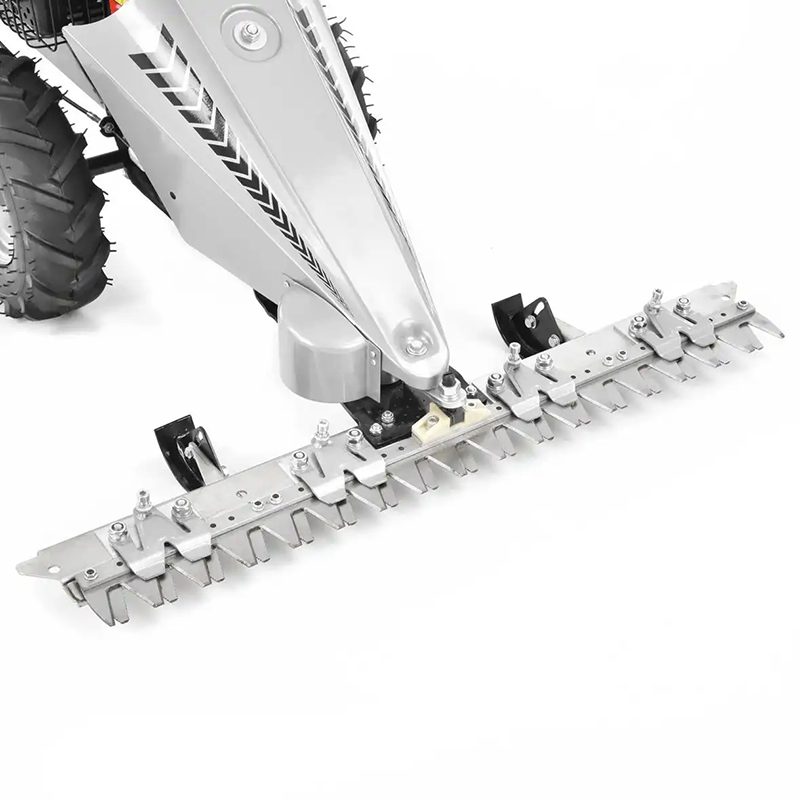
You will encounter two primary cutter bar architectures during your research. Each mechanism offers distinct operational advantages and requires different operating techniques. Understanding the physics behind the cut ensures you select the correct tool for your primary vegetation type.
Single-Action Architecture relies on a traditional, time-tested design. Only the top knife section moves rapidly back and forth. The lower rock guards remain completely stationary to act as an anvil. You pay a lower initial cost for this setup. The mechanical design remains relatively simple to troubleshoot. However, the asymmetric motion creates higher vibration throughout the tractor chassis. You must also run at much slower ground speeds. Pushing too fast causes thick, damp brush to jam against the stationary guards.
Double-Action Architecture uses dual moving components. Both the top blades and the bottom blades oscillate simultaneously in opposite directions. This scissor-like design significantly reduces overall tractor vibration. The counter-moving forces cancel each other out. You achieve much faster cutting speeds across open ground. The dual blades slice through thicker brush up to 1.5 inches easily. It virtually eliminates annoying clogging issues in dense, wet mats of grass. Expect a higher upfront investment for this performance upgrade.
Performance Metric | Single-Action Architecture | Double-Action Architecture |
|---|---|---|
Blade Movement | Top knife moving, bottom stationary | Both upper and lower knives oscillate |
Operator Vibration | Moderate to High (requires slower RPM) | Very Low (counter-balancing forces) |
Optimal Ground Speed | Slow (1 to 3 mph) | Moderate (3 to 5 mph) |
Clogging Susceptibility | Moderate in wet, dense grass | Almost negligible in all conditions |
Complexity and Maintenance | Simple mechanics, easy visual inspection | Higher part count, tighter tolerances needed |
Parts availability serves as the ultimate bottleneck for long-term ownership. You must evaluate the brand behind the equipment just as harshly as the steel itself. Finding a reliable Sickle Bar Mower manufacturer prevents endless frustration during your busiest seasons.
Domestic parts availability protects you from unpredictable seasonal downtime. Cheap, unbranded imports often look highly attractive on a specification sheet. However, they carry massive hidden risks when replacement parts inevitably wear out. Waiting six weeks for a proprietary pitman arm shipped from overseas halts your property maintenance completely. You need a partner that stocks common wear items stateside. Immediate access to cutter sections, rock guards, and drive belts keeps you operational.
Standardized wear parts matter immensely in the field. Favor equipment utilizing industry-standard, bolt-on cutter sections. Older or proprietary riveted designs force you to remove the entire heavy blade assembly. You then have to grind off rivets in a workshop. Bolt-on sections allow rapid field replacements. You simply unbolt the shattered tooth with standard wrenches and bolt on a new one. This brilliant modularity drastically reduces field-repair downtime.
Examine the warranty and dealer network carefully. Read the warranty language regarding structural failures. Ensure the Sickle Bar Mower manufacturer covers catastrophic frame weld failures or gearbox defects. Standard wear-and-tear exclusions always apply to moving blades, skid shoes, and belts. This remains normal across the industry. However, you want robust coverage for the expensive main drive components and the three-point hitch mounting frame.
Hooking up a heavy side-mounted implement requires careful balance and precise configuration. You cannot simply drop the pins in place and drive away blindly. Failure to configure your tractor properly leads to dangerous handling characteristics.
Hitch categorization requires immediate verification before purchase. Confirm your tractor features a standard Category 1 or Category 2 three-point hitch. Be highly aware of limitations regarding quick-hitch systems. The extreme offset geometry of the heavy mower frame often conflicts with rigid quick-hitch hooks. The implement needs room to articulate and pivot slightly. You usually need to rely on a direct pin-to-arm connection for proper articulation and safety.
Counterbalancing and ballast prevent dangerous lateral rollovers. A heavy 300-pound cutter bar extending six feet off your right side drastically shifts your center of gravity. You must address this rollover risk proactively. Compact frames, such as the Kubota L Series or John Deere 3-Series, require adequate ballast. You must install heavy front suitcase weights. More importantly, mount wheel weights or load the tires on the side opposite of the cutter bar. This counterbalance keeps your left tires firmly planted when lifting the mower over obstacles.
Hydraulic flow requirements dictate operational success if you select a fully hydraulically driven model. Traditional PTO-driven models rely on mechanical shafts and belts. Hydraulic models rely purely on fluid power from the tractor to oscillate the blades. You must ensure your tractor's hydraulic pump GPM (Gallons Per Minute) meets the implement's absolute minimum continuous flow requirements. Insufficient flow results in sluggish blade oscillation, poor cutting quality, and frequent stalling in thick brush.
These reciprocating machines perform brilliantly, but they require strict mechanical sympathy. You must commit to regular preventative maintenance to protect your investment. Neglecting a reciprocating blade assembly leads directly to catastrophic failure.
Routine blade management prevents cascading damage. You must check blade tolerances and hold-down clips frequently. Always replace damaged or chipped teeth immediately after striking hard debris. Operating with missing teeth forces adjacent blades to overcompensate. They take on double the cutting load. This unequal stress eventually shatters the entire cutter bar assembly. Keep a dedicated parts bin in your tractor toolbox. Stock it with extra sections, bolts, and lock nuts for immediate field repairs.
Lubrication frequencies determine the lifespan of your moving parts. You cannot ignore grease points on a reciprocating drive. Outline a strict daily greasing schedule for the pitman drive, pivot joints, and cam mechanisms. These high-friction zones oscillate thousands of times per minute under immense lateral load. Dry bearings overheat, expand, and disintegrate within hours of continuous operation. Give every grease zerk two solid pumps before you start the engine each morning.
Storage best practices protect the delicate cutting edges during the long off-season. Never store the mower with the bar locked in the vertical transport position outdoors. Rainwater pools in the overlapping blade channels and initiates severe corrosion. Store the unit inside a shed or barn if possible. Always store it with the bar lowered flat on a wooden pallet. Coat the entire cutter bar heavily with a rust-preventative spray or fluid film. This proactive step prevents the closely machined metal surfaces from seizing tightly together due to rust.
Clearing steep, overgrown banks requires specialized equipment designed specifically for off-axis cutting. We strongly recommend these versatile side-mounted implements for tricky, uneven terrain.
Accept that sickle bar mowers require more mechanical sympathy and routine maintenance than blunt-force rotary cutters.
Recognize they remain the absolute safest, most effective solution for maintaining steep embankments without risking a tractor rollover.
Always measure your tractor's exact outer rear tire width to ensure you buy a proportionately sized cutting bar.
Confirm your true PTO horsepower ratings to avoid bogging down in thick, wiry grass.
Check your tractor for available rear hydraulic remotes to determine if you can support a highly efficient hydraulic lift model.
Take these exact measurements and specifications to your local equipment dealer. This ensures you request accurate quotes for properly sized, well-balanced models that suit your specific property challenges.
A: They are typically limited to soft, green wood and light brush up to 1 to 1.5 inches in diameter. The shearing action handles green saplings easily. However, attempting to cut dense, dried hardwoods or thicker saplings will shatter the blades. Hardwoods require a specialized forestry mulcher or a heavy-duty flail mower.
A: No, unless you modify your tractor. You must install an aftermarket rear remote kit or a diverter valve to tap into the front loader's existing hydraulic circuit. If you prefer not to modify your tractor's hydraulics, a manual lift model is required for your setup.
A: Ground speed is highly dependent on material density. Thick, wet grass requires lower gears (1-3 mph) to allow the reciprocating blades to clear material without jamming. Light, dry grass allows for faster operation. Dual-action mowers naturally permit higher ground speeds than traditional single-action models without clogging.


