Views: 0 Author: Site Editor Publish Time: 2026-06-29 Origin: Site


Splitting your own firewood provides a profound sense of self-reliance. It keeps your home warm during the harsh winter months. But the heavy equipment required can introduce entirely new headaches. Homeowners often find themselves trading intense wood-chopping labor for frustrating engine-maintenance labor. Dealing with a stalled engine on a freezing autumn morning defeats the purpose of convenient home heating.
For a homeowner prioritizing minimal upkeep, the ideal machine must start reliably after months of storage. It must require minimal fluid management while possessing enough tonnage to process seasonal cords. In this guide, we evaluate electric and gas models. We view them strictly through the lens of long-term maintenance and residential usability. You will learn how different power sources impact reliability over time. We will show you how to match machine specifications to your actual wood-burning needs. Finally, you will discover why certain splitting mechanisms save you hours of garage tinkering.
Electric models unequivocally win the "minimal upkeep" category, requiring zero engine maintenance, no fuel stabilization, and allowing for safe indoor/garage operation.
Gas models offer superior tonnage and off-grid mobility but introduce the recurring maintenance of a small combustion engine (oil changes, carburetors, spark plugs).
For 80% of residential users splitting standard hardwoods (under 12-16 inches in diameter), a high-quality 5-to-9-ton electric unit provides the optimal balance of capability and zero-headache ownership.
Contrast the physical act of splitting wood with the hidden time-cost of equipment maintenance. Chopping wood by hand drains your physical energy. Maintaining a small combustion engine drains your free time. True minimal upkeep means you spend your weekends stacking firewood instead of cleaning spark plugs. You should plug a machine in, split your logs, and put it away.
Winterization realities highlight the true burden of gas machines. Modern gasoline contains ethanol. Ethanol acts as a powerful solvent. It also pulls moisture directly from the humid air. When ethanol-blended fuel sits in a carburetor for six months, it degrades. The moisture creates a sticky sludge inside the tiny jets. This leads to gumming, hard starts, and cracked fuel lines. You must properly drain the fuel or use chemical stabilizers before winter storage. Failing to do this guarantees a frustrating start the next season.
Briefly consider the splitting mechanism itself. The power source dictates your engine maintenance. However, the splitting mechanism dictates your long-term mechanical upkeep. Hydraulic systems use pressurized fluid to push a ram. They require occasional fluid top-offs and filter changes. Kinetic systems use heavy spinning flywheels to store energy. They release this energy instantly through a rack and pinion gear. Kinetic systems eliminate hydraulic fluid entirely. They rely on simple grease and gear lubrication. Both systems offer distinct maintenance profiles for the average homeowner.
Common Mistake: Leaving untreated pump gas in a small engine over the winter is the leading cause of spring-time failures. Always drain the bowl or use an ethanol-free engineered fuel for storage.
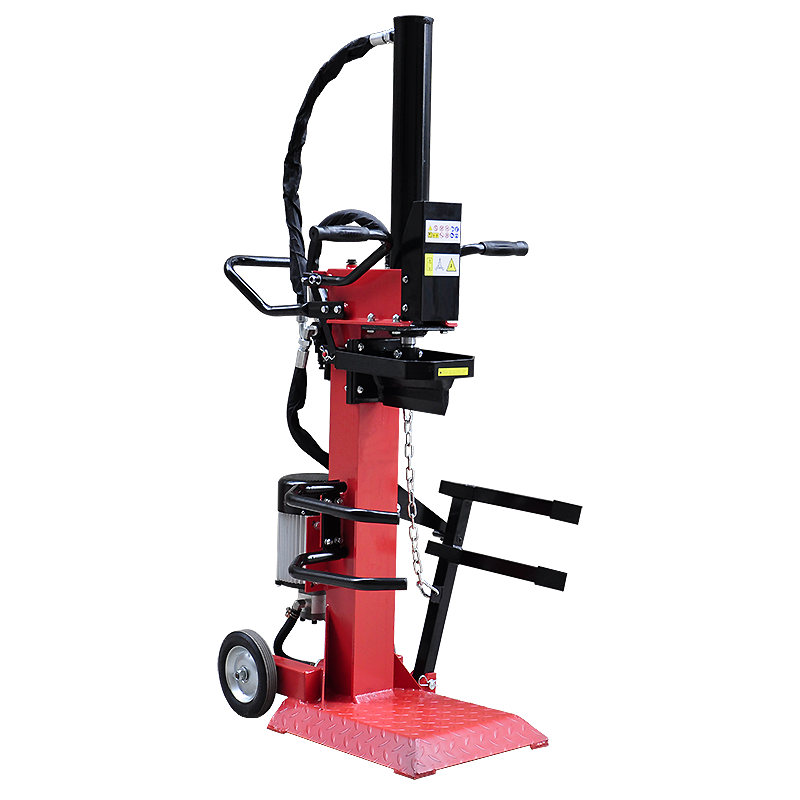
Electric units hold a massive upkeep advantage over their gas counterparts. You experience a true push-button start reality. There are no stubborn pull cords to rip. There are no sensitive choke levers to adjust. You never have to check the engine oil dipstick. You simply connect the machine to a power source and push a button. This ease of use makes a modern log splitter incredibly appealing for residential users.
Environmental and operational flexibility represents another major benefit. Gas engines produce deadly carbon monoxide. You must strictly operate them outdoors in well-ventilated spaces. Electric units produce zero emissions. You can safely operate an electric unit inside a closed garage. You can split wood inside a dry woodshed during a blinding snowstorm. This indoor capability transforms winter wood prep from a miserable chore into a comfortable task.
We must acknowledge the performance limitations through a skeptic's lens. Electric units are not perfect for every scenario.
Tonnage limits: Standard residential electric models typically cap out at 10 to 15 tons. They lack the raw crushing force of a 30-ton gas machine.
Mobility constraints: You are forever tethered to a residential electrical outlet. You cannot tow these units deep into the forest.
The extension cord trap: This is the most critical operational limit. You cannot use a cheap, thin extension cord. A standard 16-AWG cord causes severe voltage drop over long distances. This starves the electric motor of necessary power. The motor will overheat and quickly burn out. You must use a heavy-gauge 10-AWG or 12-AWG extension cord. You should keep the run under 50 feet to protect the motor.
We must acknowledge specific scenarios where gas power remains non-negotiable. Sometimes, electric units simply lack the necessary capabilities. You might process massive, knotty rounds measuring over 20 inches in diameter. You might own a large property and need to work completely off-grid. In these demanding situations, a heavy-duty gas machine becomes an absolute necessity.
However, this raw power introduces a strict maintenance checklist. You face non-negotiable upkeep tasks to keep the machine running.
Adding quality fuel stabilizer before off-season storage.
Draining and thoroughly cleaning the carburetor bowl annually.
Performing routine spark plug replacements and air filter cleanings.
Executing seasonal engine oil changes. (This is entirely separate from hydraulic fluid maintenance).
The reliability risk remains high for casual residential users. You might forget to perform one of these routine steps. Failure to properly maintain the engine often results in disaster. You drag the machine out on the first cold day of fall. You pull the cord repeatedly. The machine completely refuses to start. You then spend hours disassembling the carburetor instead of splitting your winter wood supply.
You must map required machine tonnage to common residential woods. Tonnage measures the raw crushing force applied to the wood face. Processing straight-grained, dry ash requires very little effort. A standard 5-to-7-ton electric unit easily handles dry pine or birch. However, wet or stringy woods present a serious challenge. Splitting green elm or massive wet oak rounds demands extreme force. These challenging woods often require 20+ tons of pressure to successfully shear the fibers.
Consider the physical space required to store the equipment. Gas units typically feature heavy, towable steel frames. They require dedicated floor space in your barn or garage. They utilize standard DOT-approved tires for highway towing. Electric units boast incredibly compact designs. Many feature bench-top frames or small wheeled chassis. You can easily roll a small electric unit under a workbench. They fit perfectly in tight suburban sheds.
Noise levels drastically impact the residential splitting experience. A gas engine generates a constant 85+ decibel drone. It runs continuously whether you are splitting a log or fetching a new one. This relentless noise causes severe ear fatigue. It also irritates neighbors in densely populated suburban neighborhoods. An electric motor provides on-demand humming. The motor only activates when you engage the hydraulic ram. It remains completely silent while you load the next round. Your ears and your neighbors will appreciate this quiet operation.
Evaluation Feature | Electric Models | Gas Models |
|---|---|---|
Average Tonnage | 5 to 15 Tons | 20 to 35+ Tons |
Engine Upkeep | Zero (Motor requires no oil or fuel) | High (Oil, spark plugs, carburetors) |
Storage Footprint | Compact (Fits under workbenches) | Large (Requires dedicated garage space) |
Noise Level | Low (Silent between cycles) | High (Constant loud engine drone) |
You must look far beyond the basic marketing spec sheet. The brand you choose matters just as much as the power source. Aiming for low maintenance requires selecting a reputable builder. A poorly constructed machine will fail regardless of its motor type.
Parts availability acts as a crucial longevity indicator. Heavy machinery inevitably experiences wear and tear. A hydraulic seal might eventually break. A steel wedge might snap under extreme pressure. A reliable log splitter manufacturer maintains robust domestic parts distribution. They ensure a broken 50-cent seal does not turn your entire machine into scrap metal. You should avoid anonymous overseas brands that offer zero replacement parts.
You must carefully evaluate the warranty structure. Always differentiate between consumer and commercial warranties. Read the fine print regarding system coverage. Many companies offer extensive warranties on the main engine or motor. However, they frequently limit coverage on the internal hydraulic system. You want comprehensive coverage for both the power plant and the hydraulic cylinders.
Build quality indicators separate cheap tools from lifetime investments. Look closely at the physical construction.
Demand fully welded steel construction instead of cheap bolt-together frames.
Look for heavily reinforced push plates that resist bending.
Verify the machine uses standardized hydraulic hoses and fittings.
Ensure the ram guides utilize replaceable wear pads.
If you encounter confusing hydraulic specifications, you should directly contact the log splitter manufacturer. A dedicated support team proves the company stands firmly behind their engineering.
Best Practice: Always check the machine's hydraulic fittings before the first use. Tighten any loose connections. Standardized NPT (National Pipe Thread) fittings make future hose replacements incredibly simple.
Making the final choice depends entirely on your specific property demands. Use this matrix to guide your purchase.
Buy Electric If:
You split 1 to 3 cords of wood per year.
You mostly deal with standard rounds under 16 inches in diameter.
You have easy access to a reliable 15A or 20A household outlet.
You desperately want a machine that starts instantly every single time.
You prefer working inside a warm garage during harsh weather.
Buy Gas If:
You process 5 or more massive cords every single year.
You frequently split massive, stringy, or heavily knotty rounds.
You need to tow the splitter out into the deep woods.
You work far away from any viable electrical power sources.
You are completely willing to wrench on small combustion engines seasonally.
The Compromise (Kinetic Electric):
Consider heavy-duty electric kinetic splitters if you feel torn. These unique machines offer a brilliant compromise. They utilize heavy spinning flywheels powered by a clean electric motor. You get gas-like ram speed and aggressive impact power. However, you still entirely avoid gas engine maintenance. Kinetic models suit homeowners who demand rapid cycle times but refuse to clean carburetors.
For the strict goal of minimal upkeep, electric power remains the definitive choice. These plug-and-play machines eliminate the most frustrating aspects of wood processing. You bypass ethanol degradation, spark plug gapping, and endless pull-cord pulling. You gain the massive benefit of safe indoor operation.
Consider the long-term reality over a 10-year lifespan. The countless hours saved on engine maintenance usually outweigh the downsides. Avoiding yearly carburetor rebuilds provides immense relief. This easily offsets the occasional struggle with a stubborn, knotty elm log. You spend your weekends actually splitting wood rather than fixing small engines.
Take action before finalizing your purchase today. Honestly assess your typical wood pile diameter. Identify the specific tree species you burn most often. Finally, check your available outdoor outlets to ensure adequate amperage. Matching the right electric machine to your realistic needs guarantees a warm home and a stress-free winter.
A: Yes. Standard 5-to-9-ton electric models handle straight-grained hardwoods very well. Seasoned oak and hickory actually split cleanly once the initial fibers pop. However, massive internal knots might cause the ram to stall. You simply need to reposition the log and strike a different angle.
A: Yes, but you must carefully check the wattage requirements. Electric motors require a massive power surge to start turning. The starting wattage usually demands two to three times the stated running wattage. Ensure your portable generator provides enough surge capacity to prevent motor stalling.
A: Yes, if you purchase a standard hydraulic model. They still utilize pressurized fluid to move the ram. You generally need to change this fluid every 100 to 150 operating hours. However, this interval is far less frequent and much cleaner than gas engine maintenance.
A: You can expect a realistic lifespan of over 10 years for a quality motor. To achieve this longevity, you must use proper 10-AWG or 12-AWG extension cords. You must also avoid continuously stalling the motor on massive knots, which prevents thermal burnout.


