Views: 0 Author: Site Editor Publish Time: 2026-10-19 Origin: Site


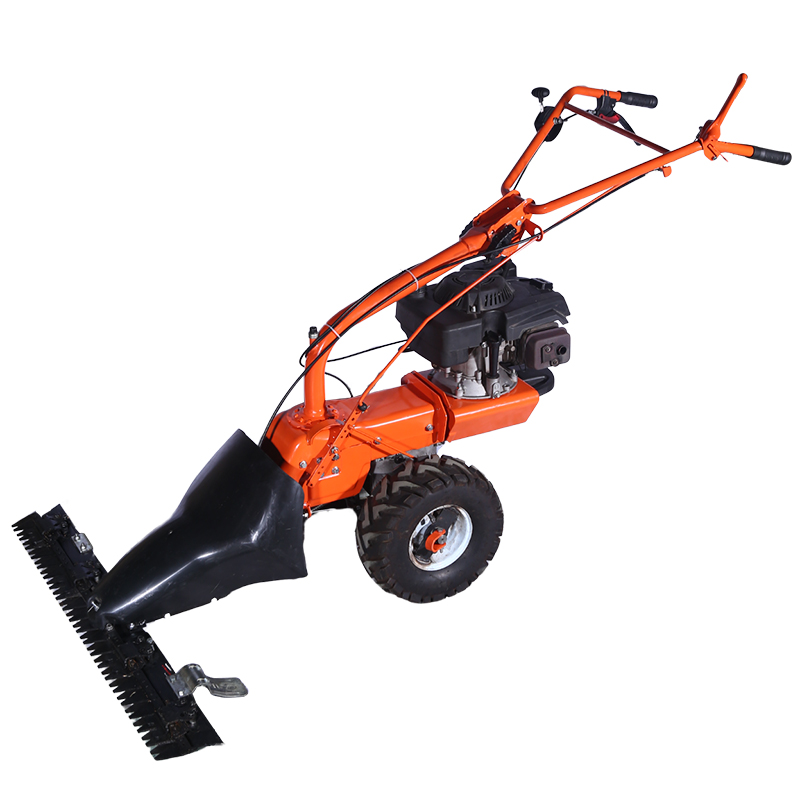
The right cutting height for a sickle bar mower depends on the vegetation, terrain, mowing purpose, and how much stubble should remain after cutting. For many meadow and field jobs, a moderate or relatively high setting provides a good balance between clean cutting, crop regrowth, and protection from stones or uneven ground. Cutting too low may increase harvested material, but it also raises the risk of scalping, soil contamination, knife damage, and slower grass recovery.
QHM sickle bar mowers provide adjustable cutting heights that allow operators to adapt the machine to different field conditions. Rather than using one setting for every job, operators should match cutting height to vegetation density, ground condition, regrowth goals, and the intended use of the cut material.
Cutting height is the distance between the soil surface and the point where the reciprocating knife sections cut the plant stems. Unlike a rotary mower or Flail Mower, which cuts vegetation with high-speed rotating blades or flails, a sickle bar mower uses a back-and-forth shearing action between moving knife sections and stationary guards.
This cutting mechanism allows tall grass and meadow vegetation to be cut near the base while leaving the stems relatively intact. The remaining plant material forms the stubble. Changing the mower height therefore changes not only how much vegetation is harvested but also how much plant structure remains for regrowth.
QHM's Sickle Bar Mower range includes machines designed for meadows, fields, large plots, and general vegetation management. Several current models allow cutting height adjustment between approximately 30 and 80 mm, giving operators room to adapt the cutter bar to different mowing conditions.
There is no single setting that works for every meadow, but a medium-to-high position is usually a practical starting point when the objective is to cut mature grass while protecting both the vegetation and cutting system.
Within a 30–80 mm adjustment range, approximately 50–70 mm can serve as a useful working range for many general meadow-cutting situations. It leaves some stubble, keeps the knife farther away from soil and small stones, and still removes most of the tall above-ground vegetation.
If the meadow is uneven, rocky, very dry, or expected to regrow after mowing, moving toward the upper part of the available range is often more appropriate. If the site is smooth and the priority is removing more standing material in a single seasonal cut, the mower may be set lower.
A practical starting guide is:
Field Condition | Practical Starting Height |
|---|---|
Smooth field, general vegetation reduction | 30–50 mm |
Typical meadow mowing | 50–70 mm |
Uneven or mildly rocky ground | 60–80 mm |
Regrowth is a priority | 60–80 mm |
Dry or stressed grass | 70–80 mm |
Very dense or lodged vegetation | 50–80 mm, adjusted after testing |
First pass on unfamiliar ground | Start high, then lower if safe |
These ranges are operational starting points rather than universal agronomic prescriptions. Plant species and forage-management goals should always be considered.
Cutting very close to the soil can increase the amount of vegetation collected during one pass, but maximum short-term yield is not always the best objective.
Many grasses store part of the energy needed for regrowth in the lower stems and tillers. Removing too much of this lower plant material can slow recovery, especially when the field is repeatedly harvested or the grass is already under heat or moisture stress.
A very low cutter bar also operates closer to stones, soil, roots, molehills, and uneven ground. Contact with hard objects can damage knife sections or guards and may interrupt the smooth reciprocating action required for clean cutting.
Low cutting can also introduce more soil into hay or collected forage. Soil contamination reduces forage cleanliness and can complicate later drying or handling.
For these reasons, lowering a Sickle Bar Mower should be a deliberate decision rather than the default setting.
A lower setting around 30–40 mm can be useful when the terrain is flat, the vegetation is not being managed primarily for rapid regrowth, and the operator wants to remove a greater proportion of standing material.
Examples can include one-time seasonal meadow clearance, vegetation reduction before another field operation, or areas where leaving a short finish is more important than maintaining a tall stubble.
The ground should be inspected before mowing. Stones, buried branches, raised roots, irrigation equipment, wire, and other obstacles become more important as the cutter bar approaches the soil surface.
Lower settings also require more attention to mower alignment. If one side of the cutter bar runs lower than the other, the knife can contact the ground even when the nominal height appears acceptable.
For unfamiliar sites, it is usually safer to begin higher and reduce the setting after the first pass confirms that the terrain is smooth.
A middle setting provides a useful compromise for general-purpose mowing.
At approximately 50–60 mm, the cutter bar remains low enough to remove most tall meadow grass while leaving enough clearance to reduce frequent soil contact. It can work well where the operator needs an efficient cut without trying to scalp the vegetation.
This range may be suitable for maintained meadows, orchard grass areas, field margins, larger plots, and seasonal vegetation control. However, actual conditions should determine the final setting.

The QHM Sickle Bar Mower SM0970, for example, combines a 970 mm cutting width with an adjustable 30–80 mm cutting-height range. This allows the same machine to move from relatively low mowing on smooth ground to a higher setup where additional ground clearance is required.
Cutting-height flexibility is valuable because field conditions often change within the same property. A smooth central meadow may tolerate a lower setting than rough margins near ditches, trees, or field boundaries.
The upper end of the mower's adjustment range is useful when plant recovery, rough terrain, or cutter-bar protection is more important than harvesting every possible centimeter of stem.
A setting around 70–80 mm can be appropriate for uneven meadows, areas containing occasional stones, grass intended to regrow, drought-stressed vegetation, or fields where soil contamination should be minimized.
Higher stubble can also hold cut material slightly above the soil. This may improve air movement underneath cut forage during field drying, depending on crop and weather conditions.
A high setting is particularly useful when mowing a field for the first time. Unknown terrain may contain shallow rocks, holes, old fence components, roots, or other objects hidden by tall grass. Starting at the upper limit reduces the risk of driving the cutting system directly into these hazards.
If the remaining vegetation is taller than desired, the operator can lower the mower after inspecting the first cut area.
Different plants respond differently to mowing.
Cool-season meadow grasses often benefit from leaving more basal plant material because regrowth depends partly on energy reserves and living tissue near the base of the plant. Repeatedly cutting these grasses extremely low may reduce stand vigor.
Legumes such as alfalfa have a somewhat different regrowth mechanism because important carbohydrate reserves are stored below ground. However, cutting very low can still increase soil contamination and expose the mower to more stones and surface irregularities.
Mixed grass-legume stands should normally be managed according to the component that needs greater protection. If maintaining the grass proportion is important, leaving more stubble can be preferable to cutting the mixture extremely short.
For warm-season forage species, a relatively high residual may sometimes be required for successful regrowth. Operators should therefore distinguish between the mechanical cutting capability of the mower and the agronomic height required by the crop.
A mower may physically be able to cut at 30 mm, but that does not mean 30 mm is the best biological height for every plant.
Tall vegetation does not automatically require a low cutter position.
A sickle bar mower slices stems at the selected level, so it can cut vegetation substantially taller than the remaining stubble. In fact, one of its advantages is that it can cut tall grass without first reducing the vegetation into small mulch particles.
When grass is very tall, tangled, or lodged, a moderate or high setting can make the first pass easier. The cutter avoids some dense material near the soil surface while also reducing the risk of hitting hidden debris.
Travel speed becomes important in these conditions. If too much vegetation enters the knife faster than it can be sheared, the cutter bar may begin to push grass forward instead of producing a clean cut.
Operators should therefore adjust three factors together:
Cutting Height + Forward Speed + Vegetation Density
Increasing engine power alone does not correct an unsuitable cutting height or excessive travel speed.
Cutting height affects both harvested quantity and cleanliness.
A lower cut generally collects more stem material because less stubble remains in the field. However, the lowest stem portions are often more mature and fibrous than the upper parts of the plant. Cutting closer to the soil can also increase the chance of incorporating dirt into the harvested material.
A slightly higher cut may leave some potential yield in the field, but it can help reduce soil contamination and support subsequent regrowth. Taller stubble can also help keep the cut crop from lying completely flat against wet soil.
The correct choice therefore depends on whether the operator is trying to maximize a single cutting or maintain a productive meadow over repeated harvests.
For recurring meadow management, sustainable regrowth and stand condition are usually more important than removing every centimeter of vegetation during one pass.
Terrain can be just as important as plant type.
Flat, smooth fields allow the cutter bar to operate relatively close to the ground with less risk. Rough ground requires more clearance because the cutter bar can contact raised soil or rocks as the machine moves over bumps and depressions.
Use a higher setting when mowing:
Rocky ground
Uneven meadows
Orchard floors with roots
Field edges
Roadside vegetation
Slopes with surface irregularities
Areas containing molehills
Fields with old stumps or branches
Land that has not been inspected recently
A sickle bar mower cuts most efficiently when the knife and guards can move through vegetation without repeatedly striking the ground.
For severe brush, very rough ground, or situations where vegetation needs to be shredded rather than laid down intact, a Garden Tools solution with a different mowing mechanism may be more appropriate.
Slopes require additional caution because the effective cutter-bar position can change as the machine leans across uneven ground.
A setting that gives comfortable clearance on level ground may bring one side of the bar much closer to the surface when crossing a slope or depression.
Operators should normally leave extra ground clearance and reduce forward speed. The mower should also be operated according to its stability limits and manufacturer's instructions.
Cutting low should never take priority over safe operation.
If the field contains abrupt banks, hidden holes, or unstable surfaces, inspect the area before mowing rather than relying only on the mower's height setting.
Nominal height is only part of the setup. The actual height at which plants are cut also depends on the position and angle of the cutter bar relative to the ground.
If the bar runs nose-down, knife guards can approach the soil and increase the chance of digging into uneven ground. If it runs too high at the front, some stems may bend underneath instead of entering the cutting zone cleanly.
The bar should therefore remain correctly aligned according to the mower design.
Operators should also check both sides of the mower. Unequal adjustment can produce an uneven stubble line and cause one end to contact the ground more frequently.
Before entering dense vegetation, make a short test cut and inspect:
Stubble height
Cut cleanliness
Uncut strips
Soil contact
Grass accumulation
Knife movement
Left-to-right height consistency
A few minutes spent checking the first pass can prevent a large area from being cut incorrectly.
Cutting height cannot compensate for a dull cutter bar.
Sickle bar mowers depend on a shearing action. Moving knife sections pass against stationary cutting surfaces, similar to a series of scissors. When the edges are sharp and correctly adjusted, stems are severed cleanly.
Dull or damaged sections may pull, tear, or push the vegetation instead. This often becomes more noticeable in fine grass or when mowing dense material.
Operators sometimes respond by lowering the cutter bar, assuming that cutting closer to the soil will improve performance. This does not solve a dull-knife problem and can expose the bar to additional stones and dirt.
If cutting becomes poor, inspect:
Knife-section sharpness
Broken sections
Guards
Hold-down clips
Knife alignment
Clearance between moving and stationary parts
Grass packed around the cutter
Correct maintenance should come before major changes to cutting height.
Cutting height and cutting width affect different aspects of mower performance.
Cutting height controls how much stubble remains. Cutting width determines how much ground the machine covers in each pass.
A wider machine improves field productivity, but it may also require more attention on irregular terrain because a long cutter bar crosses a wider ground profile.
For example, the QHM Sickle Bar Mower SMA1100 uses a 1100 mm cutting width while maintaining an adjustable 30–80 mm cutting-height range. The wider bar can improve coverage on open areas, while height adjustment allows the operator to maintain appropriate ground clearance.
For smooth meadows, a wider cutter bar can improve productivity. For narrow paths, orchards, irregular field margins, or confined spaces, a more compact machine may be easier to maneuver.
The best mower therefore combines suitable width and height adjustment rather than maximizing either specification alone.
A Sickle Bar Mower and Flail Mower can both manage grass and vegetation, but the cutting result is different.
A sickle bar mower shears stems and generally leaves longer pieces of cut vegetation lying behind the machine. This makes it useful for meadow cutting, forage harvesting, and situations where the vegetation should remain relatively intact.
A flail mower uses rotating flails to repeatedly strike vegetation and usually produces a more shredded residue. It is often preferred when the objective is vegetation reduction, mulching, or management of mixed grass and light brush.
Cutting height therefore has a different meaning on the two machines.
With a sickle bar mower, height strongly affects remaining stubble, plant recovery, hay cleanliness, and cutter-bar clearance. With a flail mower, height also affects residue size and the severity of mulching.
Choose the machine according to the desired result rather than assuming one mower can perform every vegetation-management task equally well.
Yes. Even with the correct height setting, travelling too quickly can reduce cutting quality.
The reciprocating knife needs enough time to shear stems as they enter the cutter bar. Dense, wet, tangled, or lodged vegetation increases the material load.
If travel speed is excessive, operators may notice:
Uncut strips
Ragged stems
Grass pushed forward
Material collecting around guards
Increased vibration
Frequent plugging
Reducing speed is usually preferable to lowering the cutter bar unnecessarily.
A clean cut depends on the interaction between knife speed, forward speed, vegetation density, knife condition, and cutting height.
Wet vegetation can be heavier and more likely to bunch around the cutter bar. Moist soil can also increase the risk of rutting and soil contamination.
When mowing wet or very dense grass, additional ground clearance can be useful, especially on soft or uneven surfaces. Raising the cutter slightly and reducing travel speed can help the machine maintain a cleaner cutting action.
However, very wet fields may be better left until conditions improve. Cutting when soil is saturated can damage the field even if the mower itself can operate.
For hay production, weather conditions after cutting are also important because harvested material needs sufficient time and airflow to dry.
Orchards often combine tall grass with roots, fallen branches, irrigation components, fruit, uneven soil, and restricted turning areas.
A higher sickle bar mower setting is normally safer than trying to cut close to the soil. Approximately 60–80 mm within the QHM mower adjustment range can provide additional clearance around minor surface irregularities while still controlling tall orchard grass.
Before mowing, remove branches, wire, stones, and other debris that could enter the cutter bar.
The operator should also avoid striking tree trunks or exposed roots with the outer end of the bar.
If the goal is simply maintaining short grass between orchard rows, other mower types may provide a more finished appearance. A sickle bar mower is particularly useful where grass has become tall and needs to be cut efficiently rather than finely mulched.
Start high.
This is one of the simplest ways to protect the machine.
Set the cutter toward the upper part of its available range, mow a short test section, and inspect both the stubble and ground conditions. If the surface is smooth and more vegetation needs to be removed, reduce the height gradually.
A practical sequence is:
1. Inspect the field
Walk the site where possible and remove visible rocks, branches, wire, and other debris.
2. Start around the upper range
Use additional clearance until the condition of the ground is understood.
3. Make a short trial pass
Check how cleanly the vegetation is cut.
4. Inspect the cutter bar
Look for contact marks, accumulated grass, damaged sections, or excessive vibration.
5. Lower gradually if necessary
Do not move immediately from the maximum setting to the minimum.
This approach is usually more efficient than damaging a knife section during the first few meters of mowing.
The most useful setting can be selected by considering four questions.
First, what vegetation is being cut? General meadow grass, mixed forage, orchard vegetation, and rough weeds may need different residual heights.
Second, what happens after mowing? If plants are expected to regrow quickly, leave more residual vegetation. If the purpose is a one-time seasonal cleanup, a lower setting may be acceptable.
Third, what is the ground condition? Rocks, roots, uneven soil, and hidden obstacles favor a higher setting.
Fourth, what cut quality is required? Hay production, vegetation control, and general property maintenance have different priorities.
A simple decision guide is:
Priority | Height Direction |
|---|---|
Maximum material removal | Lower |
Better ground clearance | Higher |
Faster grass recovery | Higher |
Lower soil contamination | Higher |
Smooth maintained field | Moderate/lower |
Rough or rocky ground | Higher |
Drought-stressed vegetation | Higher |
Unknown terrain | Start high |
Repeated seasonal mowing | Moderate/high |
One-time clearance | Moderate/lower if terrain allows |
The goal is not to find the lowest setting the machine can reach. It is to find the lowest setting that remains suitable for the vegetation, field, and management objective.
QHM provides outdoor power equipment for mowing, wood processing, soil preparation, material spreading, and related land-management work. Its mower range includes several sickle bar models with different cutting widths and engine configurations, allowing equipment to be matched to plot size and working conditions.
QHM sickle bar mowers use adjustable cutting-height systems so operators are not restricted to a single mowing level. Current models cover applications such as meadows, fields, large plots, and other areas with tall grass.
For equipment selection, buyers should consider:
Cutting width
Cutting-height range
Engine output
Field area
Terrain
Vegetation density
Required maneuverability
Operating frequency
A larger mower is useful for open fields, while a more compact machine can be easier to control in confined or irregular areas.
QHM can also support customers selecting other equipment for the same property, including Flail Mower, Spreader, Electric Log Splitter, and Hydraulic Log Splitter solutions according to the required job.
The best cutting height for a Sickle Bar Mower depends on vegetation, terrain, regrowth requirements, and the purpose of mowing.
Within an adjustable range such as 30–80 mm, lower settings can remove more vegetation on smooth ground, while moderate settings provide a practical balance for general meadow work. Higher settings are better suited to uneven terrain, stressed grass, repeated mowing, and situations where protecting plant regrowth or avoiding soil contamination is important.
For many ordinary mowing jobs, starting around the middle or upper part of the adjustment range is safer than immediately cutting at minimum height. Operators can then reduce the setting after inspecting the field and the first cut.
Cutting height should also be considered together with knife condition, cutter-bar alignment, forward speed, cutting width, and vegetation density. A mower that is adjusted correctly but fitted with dull or damaged knife sections will still produce poor results.
QHM offers adjustable sickle bar mowers for meadow, field, and property-maintenance applications. Before selecting a model, consider the field size, vegetation type, terrain, preferred stubble height, cutting width, and mowing frequency so the machine and its height range match the actual work.
There is no universal height. For general meadow mowing, a moderate setting is often practical, while rough terrain or fields managed for regrowth normally benefit from a higher setting.
Some QHM sickle bar mower models provide an adjustable range beginning at approximately 30 mm. A low setting should be used only when ground conditions and vegetation management goals make it suitable.
No. A higher setting can be useful on rough terrain, in stressed grass, for repeated mowing, or where additional stubble and ground clearance are desired.
Not necessarily. Very low mowing can reduce remaining plant material, increase soil contamination, and place the cutter closer to rocks and uneven ground.
For many grasses, leaving additional stubble can support faster recovery because important growing tissue and energy reserves remain near the lower plant.
Use the upper part of the mower's adjustment range when practical. Additional clearance reduces the chance of knife sections and guards striking stones.
A moderate-to-high setting is usually suitable for tall orchard grass, particularly where exposed roots, branches, or uneven soil are present.
Yes. Very low cutting can collect more stem material and increase the risk of soil contamination. Higher stubble can improve field cleanliness and may support regrowth and drying conditions.
Yes. A sickle bar mower cuts stems at the selected height regardless of how tall the upper vegetation is, provided the cutter has adequate capacity and forward speed is suitable.
Possible causes include excessive travel speed, dull knife sections, damaged guards, poor knife adjustment, dense or wet vegetation, and cutter-bar misalignment.
A sickle bar mower is useful when the objective is to shear stems cleanly and leave the cut vegetation relatively intact. A flail mower is more suitable when vegetation needs to be chopped or mulched.
No. On unfamiliar ground, begin at a higher setting, make a short test pass, inspect the terrain and cut quality, and lower the cutter gradually if necessary.
Several QHM sickle bar mower models provide an adjustable cutting-height range of approximately 30–80 mm, allowing operators to adapt the machine to different vegetation and terrain conditions.


