Views: 0 Author: Site Editor Publish Time: 2026-06-03 Origin: Site


In commercial hay production, equipment downtime and maintenance overhead directly erode profit margins. While disc mowers are common for speed, the clean cut and low horsepower requirements of a sickle bar mower remain highly relevant for delicate forages like alfalfa and specific operational scales.
The defining factor for modern implement reliability and operational efficiency lies in the drive mechanism. Operators must choose between traditional mechanical power transfer and modern hydraulic drive systems. A mismatched system causes frequent breakdowns, stalling operations when harvest windows are tightest.
Evaluating these two systems requires moving past the initial purchase price to analyze fleet compatibility and long-term maintenance realities. We will explore operational demands, mechanical versus hydraulic mechanisms, and head-to-head performance dimensions. You will gain actionable insights to select the best equipment for your commercial haying fleet.
Vibration & Wear: Hydraulic-drive systems drastically reduce the mechanical vibration that leads to metal fatigue and frequent breakdowns in traditional models.
Tractor Requirements: Mechanical drives rely on standard PTO and lower horsepower, while hydraulic models require a tractor with sufficient and continuous hydraulic fluid flow (GPM).
Operational Flexibility: Hydraulic systems allow the cutter bar to operate efficiently at extreme angles and separate knife speed from tractor ground speed.
Vendor Support: Choosing a reliable Sickle Bar Mower manufacturer with robust domestic parts availability is as critical as the drive-type decision itself.
Commercial operations cannot afford mid-season breakdowns. You must optimize every minute of your harvest window. Weather patterns dictate strict schedules across the agricultural sector. Delays ruin forage quality rapidly. The choice of drive system dictates what type of maintenance your crew will perform daily. It also determines how often they must perform it. You need reliable tools built for continuous commercial application.
A successful deployment relies on clear performance metrics. Maximizing uptime stands as your top priority during the season. You must match the implement precisely to existing tractor capabilities. Furthermore, achieving a clean, unbruised cut on the forage ensures premium feed value. Crops like alfalfa and clover demand gentle handling. Rough cutting shatters valuable leaves and degrades the final bale quality.
Evaluating drive mechanisms requires a highly structured approach. We will examine power transfer efficiency first. Next, we will assess moving parts reduction. Finally, we will explore terrain adaptability. A solid foundation ensures long-term operational viability. Operators must balance these structural factors against their current fleet capabilities. You cannot force a mechanical mismatch without risking severe equipment damage.
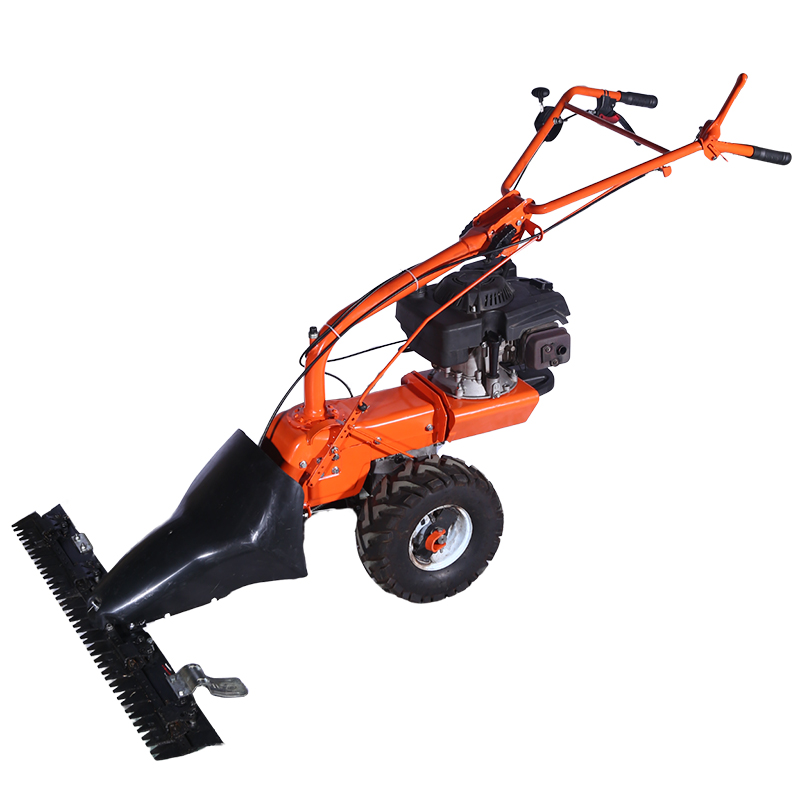
Mechanical drives represent decades of proven agricultural engineering. This traditional mechanism utilizes the tractor’s standard PTO shaft. It drives a complex series of heavy belts and iron pulleys. It transfers rotary motion through pitman arms or heavy-duty wobble boxes. These robust components convert circular rotation into the linear, reciprocating motion necessary for the cutter bar.
Let us review the daily operational realities of mechanical setups. Operators face distinct advantages and specific mechanical challenges in the field.
Pros: They remain universally compatible across the industry. You can hook them up to older or lower-spec tractors easily. They offer much simpler upfront mechanical diagnostics. You can perform visual inspections of belts and grease zerks quickly. They also require a significantly lower initial capital expenditure.
Cons: High vibration leads directly to structural fatigue over time. Mechanical models have severely restricted cutting angles. Operating a mechanical bar at steep angles binds the heavy driveline. They also feature a high number of wearable friction parts. You must constantly monitor bearings, belts, and steel pivot points.
These units fit specific operational scenarios perfectly. Farms often rely on older utility tractor fleets. These older fleets might lack auxiliary hydraulics entirely. In these specific cases, mechanical mowers shine brightly. They also serve brilliantly as secondary or backup implements. If your primary disc mower fails unexpectedly, a mechanical Sickle Bar Mower gets you back into the field immediately.
Hydraulic technology changed the agricultural landscape significantly. This mechanism overview highlights a major evolutionary shift in power transfer. It replaces the PTO-driven driveline entirely. A self-contained hydraulic motor mounts directly at the end of the cutter bar. The tractor’s hydraulic remotes provide constant, reliable fluid power to this compact motor.
Fluid dynamics replace physical belts and iron pulleys. Operators experience completely different daily realities when adopting fluid power.
Pros: You gain exceptionally smooth field operation. The fluid design isolates heavy vibration effectively. It allows continuous cutting at up to 90-degree vertical angles. You can also use severe downward angles effortlessly. This proves incredibly useful for ditch banks or tight transport positioning. It features significantly fewer moving mechanical parts. It eliminates physical belts and long drivelines entirely.
Cons: They demand a higher initial purchase price upfront. They establish an absolute dependency on tractor hydraulic health. You face potential fluid overheating issues during long summer days. If the tractor’s internal cooling system is inadequate, pump problems arise quickly.
High-yield commercial producers benefit most from this modern setup. They utilize modern tractors capable of strong, continuous GPM output. These operations prioritize low daily maintenance hours. They also value minimal operator vibration. Reduced vibration means much less operator fatigue over a twelve-hour shift. It also means fewer cracked steel welds on the implement frame. Modern fleets handle fluid power efficiently and reliably.
Comparing these disparate systems requires looking at specific engineering metrics. We evaluate fleet compatibility, maintenance routines, and operational efficiency.
Mechanical units demand very little baseline performance from your tractor. They require a standard 540 RPM PTO shaft. They present a remarkably low threshold for operational entry. Most mid-sized utility tractors handle them easily. You do not need advanced closed-center hydraulic circuits to run a belt-driven implement.
Hydraulic models dictate much stricter baseline requirements. They need specific continuous flow rates to function. You often need an 8–12 GPM minimum flow. This metric depends heavily on the specific cutter bar length. You must also verify open or closed center hydraulic system compatibility. Mismatched hydraulic systems cause severe fluid overheating. They also lead to premature tractor pump failure.
Mechanical drives demand relentless daily attention from your crew. You must grease multiple pivot points every single morning. Frequent belt tensioning remains absolutely mandatory. Eventually, you will face complex wobble-box rebuilds. However, emergency field fixes are often quite possible. Your crew can use standard hand tools. A broken drive belt takes merely minutes to replace.
Hydraulic drives flip this maintenance paradigm completely. Daily greasing drops significantly across the implement. Instead, you monitor hydraulic filters and reservoir fluid levels. You must conduct regular, thorough hose inspections. High-pressure fluid leaks require immediate attention. Motor failures are exceedingly rare in fluid systems. However, they require specialized part replacement. You cannot execute a quick field patch on a blown hydraulic motor. You must rely on immediate dealer support.
To clarify these engineering differences, review the technical comparison below.
Evaluation Metric | Mechanical-Drive Models | Hydraulic-Drive Models |
|---|---|---|
Primary Power Source | Standard 540 RPM PTO Shaft | Tractor Hydraulic Remotes |
Operating Vibration Levels | High (Requires heavy structural steel) | Low (Motor isolates reciprocating mass) |
Permissible Operating Angles | Limited (Driveline binding risk) | Extreme (-45 to +90 degrees) |
Daily Maintenance Routine | Extensive (Belts, bearings, grease points) | Minimal (Hose checks, fluid levels) |
Emergency Field Repairability | High (Basic hand tools suffice) | Low (Requires specialized OEM parts) |
Choosing the right equipment impacts your entire harvesting season. You must approach the sourcing process methodically to avoid costly bottlenecks.
Audit your primary mowing tractors first. Check the manufacturer specifications carefully. Look at continuous GPM output under maximum load. If they cannot sustain the required hydraulic flow, reconsider your immediate options. You cannot afford to starve the tractor's steering or transmission circuits. If hydraulic capacity falls short, mechanical power becomes the forced logical choice.
Vetting your equipment source is equally crucial. You must scrutinize the Sickle Bar Mower manufacturer. A strong, responsive partnership prevents prolonged seasonal downtime.
Parts Availability: Evaluate their supply chain thoroughly. You need quick access to high-carbon replacement teeth and rock guards. You also need access to specialized hydraulic motors or heavy-duty belts. A robust domestic inventory keeps your fleet running smoothly.
Warranty & Support: Look for highly transparent warranties. They must cover fluid hydraulic motors properly. They should also cover mechanical wobble boxes under heavy commercial use cases. Ask specific questions about commercial operation clauses. Contact your Sickle Bar Mower manufacturer support team to gauge responsiveness before purchasing.
Engineering Quality: Investigate the heavy build quality of the cutter bar itself. Look at the raw steel thickness. Examine the automated welding quality on the main frame. A superior hydraulic drive cannot save a poorly cast iron cutter bar. The steel foundation must withstand harsh field conditions perfectly.
Mechanical-drive sickle bar mowers remain a highly viable tool. They offer reliable, straightforward mowing for fleets utilizing standard PTO setups. However, commercial hay operations often prioritize entirely different metrics today. They demand sharply reduced implement vibration. They need vastly lower maintenance hours. They also require maximum terrain versatility for uneven ground. In these demanding cases, modern hydraulic-drive systems offer a superior long-term performance advantage.
To ensure a successful implement deployment, take these actionable next steps today:
Calculate your primary tractor’s continuous GPM output accurately.
Evaluate your historical seasonal downtime caused by mechanical mower maintenance.
Identify tricky terrain on your property requiring exceptionally steep cutting angles.
Request detailed hydraulic spec sheets from top-tier manufacturers.
A: Only if the tractor meets the manufacturer's minimum continuous GPM hydraulic flow requirements. PTO-driven auxiliary hydraulic pumps can be retrofitted safely. They generate the necessary fluid flow independently of the tractor's internal aging pump. However, this mechanical modification adds to the overall initial investment. You must balance this upgrade against buying a newer, fully equipped machine.
A: Hydraulic drives allow the knife speed to remain perfectly constant. They operate independently of tractor engine RPM or ground speed. This precise isolation provides a distinctly cleaner cut in highly variable crop densities. Mechanically linked PTO drives fluctuate based strictly on tractor RPM. A sudden drop in engine speed slows the mechanical blade directly.
A: They are often noticeably lighter or similarly weighted. Heavy mechanical drivelines, iron pulleys, and thick wobble boxes add massive weight. Hydraulic models replace these outdated components entirely. They use a relatively compact hydraulic motor and lightweight flexible hoses. This specific weight reduction lessens soil compaction and decreases overall tractor strain.


