Views: 0 Author: Site Editor Publish Time: 2026-10-15 Origin: Site


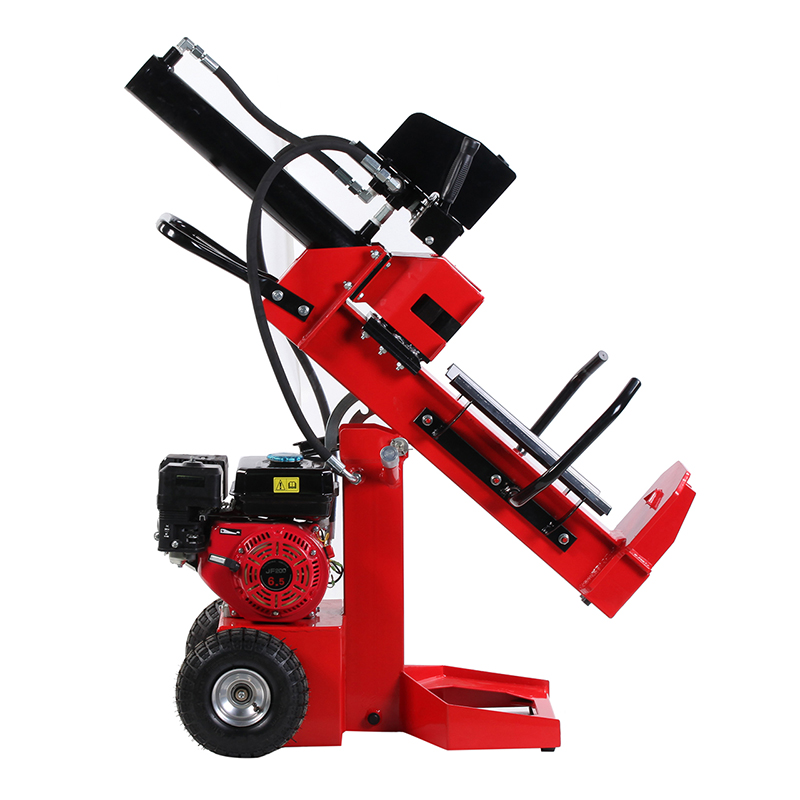
An Electric Log Splitter makes the most sense when wood splitting takes place near a reliable power source, the logs fall within a predictable size range, and the user values quieter operation, simple starting, and lower routine maintenance. It is particularly practical for homeowners, farms, workshops, firewood preparation areas, campsites, and small commercial operations that split wood regularly but do not require the mobility or extreme splitting force of a large gasoline-powered machine.
However, choosing an electric model is not simply a question of whether electricity is available. Log diameter, wood species, knots, moisture condition, splitting volume, voltage supply, working location, required cycle time, and operator workflow all affect the decision. QHM offers different machines within its Log Splitter range, allowing buyers to compare electric and engine-powered configurations according to the actual workload rather than selecting only by tonnage.
An Electric Log Splitter uses an electric motor as its main power source. Depending on the machine design, the motor can drive a hydraulic pump or a mechanical kinetic system that generates the force required to push a log against a splitting wedge.
This distinction is important because “electric” and “hydraulic” do not describe opposite machine types. Electric describes the power source, while hydraulic describes how force is transmitted. An Electric Hydraulic Log Splitter uses an electric motor to drive a hydraulic pump, which pressurizes hydraulic oil and moves a cylinder. A gasoline-powered machine can use exactly the same hydraulic principle while obtaining its input power from an internal combustion engine.

For example, QHM's Log Splitter VLS02E-65T12 uses an electric motor together with a hydraulic splitting system. The current configuration provides up to 12 tons of splitting force, handles logs up to approximately 650 mm long and 400 mm in diameter, and is available with different electrical supply configurations.
This makes electric models suitable for more than occasional small branches. Correctly sized machines can process regular firewood, hardwood and softwood rounds, farm timber, and other prepared logs as long as the material remains within the machine's rated capabilities.
An electric model becomes attractive when the working environment is relatively fixed and the operator has convenient access to suitable electricity.
A homeowner preparing winter firewood beside a garage is a typical example. Logs can be cut to a consistent length, moved to one processing area, split, and stacked nearby. There is little benefit in maintaining a gasoline engine if the machine rarely needs to leave that location.
The same principle can apply to farms, woodworking facilities, small sawmills, rental yards, campsites, and firewood businesses. If logs arrive at one central work area, an electric machine can provide predictable operation without fuel storage, engine starting, spark plugs, carburetor maintenance, or exhaust emissions from an internal combustion engine.
An electric splitter generally makes sense when most of the following conditions apply:
Working Condition | Why Electric Can Make Sense |
|---|---|
Reliable power is nearby | No fuel engine is required |
Splitting location is fixed | Limited need for remote mobility |
Logs are predictable in size | Machine capacity can be matched accurately |
Work is residential or semi-commercial | Lower noise is useful |
Maintenance time should be minimized | No gasoline engine servicing |
Work takes place near buildings | No engine exhaust during operation |
Splitting is regular but controlled | Electric power provides repeatable operation |
Electricity cost is predictable | Easier operating-cost planning |
An electric machine becomes less attractive when logs are scattered across remote woodland, extremely large rounds are common, or the splitter must regularly be towed to locations without electrical infrastructure.
This comparison often causes confusion because many Electric Log Splitters are also Hydraulic Log Splitters.
A Hydraulic Log Splitter contains a hydraulic pump, oil reservoir, control valve, hydraulic cylinder, and splitting wedge. The pump creates oil flow, the hydraulic system converts pressure into cylinder force, and the ram pushes the log into the wedge.
The pump can be powered by:
An electric motor
A gasoline engine
A diesel engine
Tractor PTO power
Another hydraulic power source
Therefore, the more useful comparison is usually electric-powered hydraulic splitter vs gasoline-powered hydraulic splitter.
Factor | Electric Hydraulic Splitter | Gasoline Hydraulic Splitter |
|---|---|---|
Power Source | Electricity | Gasoline engine |
Exhaust During Operation | None from the drive motor | Combustion exhaust |
Noise | Generally lower | Generally higher |
Routine Engine Maintenance | Minimal | Engine servicing required |
Remote Mobility | Limited by power access | High |
Starting | Electric switch/control | Recoil or electric engine start |
Heavy-Duty Force Potential | Moderate to high depending on model | Often available at higher tonnage |
Fuel Storage | Not required | Required |
Electrical Supply | Required | Not required |
Best Environment | Fixed work areas | Remote or mobile work |
The choice should therefore depend on work location and log requirements rather than assuming one operating principle is inherently better.
Electric power is enough when the machine's actual splitting force matches the wood being processed.
The first consideration is log diameter. Larger rounds usually require more force because a greater cross-section must be separated. However, diameter alone does not determine difficulty. Wood species, grain direction, branch knots, crotches, moisture, age, and defects can all change splitting resistance.
A straight-grained softwood round may split easily even at a relatively large diameter. A smaller hardwood round containing several knots can require substantially more force.
QHM's VLS02E-65T12 illustrates the capacity available from a current electric-hydraulic configuration: up to 12 tons of splitting force with a maximum specified log length of 650 mm and diameter of 400 mm. For users needing more electric splitting capacity, the 3500W Electric Log Splitter for Backyard Tasks, model VLS02E-65T15, increases maximum splitting force to 15 tons while retaining a 650 mm maximum log length and 400 mm maximum diameter.
This type of machine can make sense for regular firewood processing where the user cuts logs to consistent dimensions before splitting.
The important rule is to leave reasonable capacity margin. A machine that can technically split the hardest log only at its maximum rating may operate slowly and experience greater stress. Buyers should consider the most difficult logs they process regularly, not only the average piece.
An Electric Log Splitter becomes less suitable when the workload consistently involves oversized, heavily knotted, irregular, or dense timber.
In this situation, a larger engine-driven Hydraulic Log Splitter can provide significantly greater splitting force and greater mobility. For comparison, QHM's Log Splitter BLS04G-105T35 uses a 9 HP gasoline engine and hydraulic system to provide up to 35 tons of splitting force. Its listed capacity extends to logs approximately 1050 mm long and 500 mm in diameter.
That difference matters for forestry contractors, commercial firewood operations, large farms, and users processing difficult hardwood.
A higher-force machine makes more sense when:
Large-diameter logs are routine rather than occasional.
Logs contain frequent knots and crotches.
Splitting takes place in remote woodland.
Power outlets are unavailable.
Logs cannot easily be transported to a fixed processing site.
Daily production volume is high.
Longer log lengths need to be processed.
Downtime caused by difficult rounds is unacceptable.
Buying significantly more splitting force than required also has disadvantages. Larger machines generally cost more, weigh more, consume more fuel or power, and take more space. The correct machine is the one that handles the normal workload efficiently with sufficient reserve capacity.
Residential and workshop environments favor electric machines for several practical reasons.
The first is noise. An electric motor generally produces less noise than a combustion engine. Actual splitting still creates impact and wood-breaking noise, and the hydraulic system is not silent, but removing continuous engine noise makes repeated operation more suitable around houses, workshops, farms, and other noise-sensitive properties.
The second advantage is starting simplicity. There is no fuel mixture, choke procedure, carburetor, or cold engine to manage. With the correct electrical connection and safety controls in place, the motor can provide repeatable starting.
A third advantage is the absence of engine exhaust. This does not mean that any enclosed area is automatically a safe work site. Log splitting still requires sufficient space, lighting, electrical protection, stable flooring, and control of flying wood fragments. However, an electric motor does not produce combustion gases, which can simplify operation around covered or semi-enclosed work areas.
Storage is also simpler because there is no gasoline in an engine tank. For users who split wood seasonally and then store the equipment for several months, this removes concerns associated with stale fuel and carburetor deposits.
Maintenance can become one of the strongest reasons to choose an Electric Log Splitter.
A gasoline-powered machine combines two systems: an internal combustion engine and the splitting mechanism. The engine requires its own maintenance schedule involving engine oil, air filters, spark plugs, fuel condition, and other service items depending on the model.
An electric-hydraulic machine removes most gasoline-engine maintenance, although it is not maintenance-free.
The operator still needs to inspect:
Hydraulic oil level and condition
Hydraulic hoses
Fittings
Cylinder seals
Electrical cable and plugs
Switches and controls
Splitting wedge
Structural bolts
Wheels and tires
Guards
Emergency stop and two-hand controls where fitted
The advantage is that there are fewer combustion-related service items.
This matters for homeowners who may use a splitter intensively for only several weekends each year. It also matters for commercial users operating a fleet of machines because every engine adds service labor, spare parts, fuel management, and potential downtime.
For distributors and rental fleets, simpler routine maintenance can also reduce the chance that end users return equipment with fuel-system problems caused by incorrect storage.
Electric models are often associated with homeowners, but they can also make sense commercially when the process is centralized.
A small sawmill, woodworking workshop, farm, wood-processing facility, or firewood packaging operation may have logs delivered to one fixed work station. If suitable electrical power is already available, an electric machine can operate without repeated refueling and without bringing combustion exhaust into the processing area.
Three-phase electricity is particularly relevant for higher-capacity equipment. QHM's VLS02E-65T15 uses a 400V, 50Hz, 3500W configuration and provides up to 15 tons of splitting force. This places it between small household machines and much larger gasoline-powered hydraulic splitters.
For commercial use, buyers should evaluate more than splitting tonnage. Important factors include cycle time, duty cycle, hydraulic temperature, operator ergonomics, table height, log handling, available power supply, spare parts, and daily throughput.
For example, a slightly more powerful splitter does not necessarily increase productivity if the operator spends most of the working day lifting and positioning heavy logs. Log tables, conveyors, lifting aids, vertical splitting orientation, and workflow layout can have just as much effect on output as maximum tonnage.
Yes. Wood characteristics are among the most important selection factors.
Softwoods such as pine and fir often have relatively straight grain and may require less force under favorable conditions. Hardwoods such as oak, maple, hickory, and similar species can demand more force, but species alone does not predict every split.
Grain structure often matters more than the wood name.
A straight section of hardwood can split more easily than a heavily branched softwood crotch. Knots force the wedge through fibers running in different directions, increasing resistance and sometimes causing the log to rotate or split unpredictably.
Moisture condition can also change behavior. Some species split more easily when green, while others become easier after partial drying. Frozen logs can behave differently again.
Before choosing an electric machine, buyers should consider:
Typical log diameter
Maximum regular log diameter
Typical length
Hardwood or softwood percentage
Frequency of knots and branch junctions
Green or seasoned condition
Number of logs processed per session
If most pieces are moderate and straight but one unusually difficult log appears occasionally, buying an oversized splitter for that single case may not be economical. The difficult piece can be cut shorter, repositioned, or processed by another method.
Electrical compatibility is essential.
A machine designed for 230V cannot automatically be connected to every outlet simply because the nominal voltage appears similar. Motor power, current draw, plug type, frequency, branch-circuit rating, grounding, protection devices, and local electrical standards must all be considered.
Higher-capacity commercial units may require three-phase power. QHM's current electric splitter range includes both single-phase and three-phase configurations depending on model.
Before purchasing, confirm:
Voltage
Frequency
Single-phase or three-phase supply
Required current
Plug and socket configuration
Circuit protection
Grounding
Cable requirements
Maximum permitted extension-cord length if applicable
Voltage drop is an important issue with long extension cables. An undersized or excessively long cable can reduce voltage reaching the motor, causing poor performance and overheating.
Where extension cables are permitted, they should be rated for the machine load and the working environment. Outdoor electrical connections also need suitable moisture protection, and local requirements for RCD/GFCI protection should be followed.
If a work site does not have an appropriate electrical supply, the supposed convenience of an electric machine disappears quickly.
Remote mobility is one area where gasoline-powered equipment normally has a clear advantage.
A woodlot may contain logs spread across a large area. Moving every round back to a building with electrical supply can require more labor than bringing the splitter to the timber.
Gasoline machines can operate wherever fuel can be transported. Towable units can also move between forestry sites, farms, and customer properties without requiring an electrical connection.
Electric machines make more sense when the work can be organized around a central splitting station.
For example:
Remote workflow: Cut tree → move splitter to log → split near felling area.
Central workflow: Cut tree → transport rounds to yard → split beside workshop → stack firewood.
The second workflow strongly favors electric power if the site already has suitable electricity.
Therefore, buyers should think about material movement rather than evaluating only the splitter itself.
Operating orientation also affects whether an Electric Log Splitter fits the job.
Horizontal splitters place the log on a beam or table. This can be comfortable for small and medium pieces that are easy to lift. The operator can establish an efficient rhythm by placing rounds at waist height and moving finished firewood directly to a stack or conveyor.
Vertical splitters allow large logs to remain closer to ground level. Instead of lifting an entire heavy round onto a raised beam, the operator can roll or position it into the splitting area.
QHM's VLS02E electric configuration uses a vertical splitting arrangement, which can be useful when rounds approach the upper end of the machine's rated size.
Ergonomics should not be ignored. A machine capable of splitting a 40 cm diameter log does not automatically make lifting that log safe or efficient.
For repeated heavy work, buyers should evaluate:
Working height
Log table
Vertical operation
Wheels
Handle position
Loading assistance
Finished-piece handling
Reducing manual lifting can provide a larger productivity improvement than reducing the hydraulic cycle by a few seconds.
There is no universal tonnage recommendation because splitting resistance varies too widely.
Tonnage should be treated as one part of a capacity specification rather than the sole indicator of machine quality.
A useful decision framework is:
Workload | General Capacity Priority |
|---|---|
Small straight firewood | Compact size and easy operation |
Regular household firewood | Moderate splitting force |
Medium hardwood rounds | More force reserve |
Knotted hardwood | Higher force + strong structure |
Large commercial rounds | Heavy-duty Hydraulic Log Splitter |
Fixed commercial site | Higher-capacity electric can work |
Remote forestry work | Gasoline mobility usually matters more |
Users should also compare maximum log length and diameter. A high-tonnage machine with a short bed may still be unsuitable for long rounds.
Cycle time matters for volume work, while frame strength, wedge design, hydraulic flow, cylinder construction, and control layout influence real productivity.
A well-matched 12- or 15-ton electric splitter can therefore be more useful than a much larger machine if most logs are within its working range.
Not every electrically powered splitter needs to use hydraulics.
Kinetic systems store rotational energy in flywheels and release it through a mechanical drive. Their main advantage can be a very fast splitting and return cycle compared with conventional hydraulic movement.
Hydraulic systems, by contrast, apply force progressively and are widely used because they provide controlled power through difficult material.
Neither design is universally better.
A kinetic machine can make sense for high-volume processing of relatively consistent logs where speed is important. A hydraulic Electric Log Splitter can make more sense where controlled, sustained splitting force is preferred.
When comparing them, consider:
Log difficulty
Cycle time
Maximum splitting force
Mechanical complexity
Maintenance
Noise
Operator experience
Safety controls
Daily production volume
The correct choice should reflect the actual wood stream rather than headline cycle-time figures.
The main limitation is dependency on electricity.
Without the correct electrical supply, the machine cannot operate. This makes an electric model less flexible for forestry contractors or users working across large rural properties.
Maximum force can also be a consideration. Electric models can provide meaningful hydraulic force, but very large heavy-duty splitters are commonly powered by gasoline engines, diesel engines, tractors, or industrial electrical systems.
Another limitation is cable management. Power cables must stay away from logs, wheels, the splitting zone, water, and operator walking paths.
Electric equipment also needs protection from unsuitable weather conditions. Operators should follow the manufacturer's instructions regarding rain, water exposure, and outdoor electrical use.
Finally, an electric splitter may encourage buyers to underestimate the danger because it starts quietly and easily. The splitting wedge and hydraulic cylinder can still generate enough force to cause serious injury. Electrical power does not make the mechanical splitting process inherently safer.
Safe operation begins with a stable work area.
Place the machine on firm, level ground whenever the design requires it. Keep loose wood, split pieces, cables, and tools away from the operator's feet. Ensure that the log sits correctly against the machine support before activating the wedge.
Two-hand controls, where provided, are intended to keep both hands away from the splitting zone. They should never be bypassed.
The operator should also:
Wear suitable eye protection.
Use footwear suitable for handling heavy timber.
Avoid loose clothing near moving equipment.
Keep bystanders outside the work zone.
Inspect logs for nails, wire, or other foreign objects.
Keep hands away from cracks opening in the wood.
Stop the machine before removing jammed material.
Inspect cables and hydraulic hoses regularly.
Follow the rated log dimensions.
Disconnect electrical power before service work.
A partially split log can store mechanical energy and move unexpectedly. Operators should not place hands into a crack or try to pull material free while the hydraulic system remains energized.
Electric power can reduce several operating costs, particularly where grid electricity is readily available.
There is no gasoline to purchase, transport, store, or spill. Electric motors also avoid many routine engine-maintenance items.
However, total cost should include more than energy.
A practical ownership calculation is:
Purchase Cost + Electricity/Fuel + Maintenance + Hydraulic Service + Labor + Downtime + Transport
For a homeowner processing a few cords of firewood each year beside the garage, the simplicity of electric power can make the ownership economics attractive.
For a forestry contractor operating miles from electrical infrastructure, the cost of transporting logs to power may outweigh any savings in fuel or maintenance.
For a small commercial workshop already equipped with three-phase electricity, an industrial Electric Log Splitter can make considerable sense because the machine can remain in a fixed workstation and run from existing infrastructure.
The operating environment determines the economics.
A simple decision process can eliminate many unsuitable choices.
Choose an Electric Log Splitter when:
Most work takes place near reliable electricity.
Logs are within a known diameter and length range.
7–15 tons or the selected model's rated force covers the normal workload.
Lower noise is important.
The machine is stored for long periods between seasons.
Reduced engine maintenance is valuable.
Splitting occurs at a central yard or workshop.
No engine exhaust is preferred near the work area.
Consider a gasoline-powered Hydraulic Log Splitter when:
Work regularly takes place away from electricity.
Logs are large, irregular, or heavily knotted.
Higher tonnage is routinely required.
The splitter moves frequently between properties.
Forestry and commercial work require maximum mobility.
Long logs need greater machine capacity.
For some businesses, having both types can make sense. Electric equipment can handle routine processing at the main yard, while a gasoline splitter handles remote or unusually demanding jobs.
A log splitter normally solves one specific part of a larger land-management workflow.
Tree branches and smaller woody material may be processed by a wood chipper, while logs suitable for firewood are cut to length and sent to the splitter. Grass and vegetation management may involve a Flail Mower or Sickle Bar Mower, while seed, fertilizer, salt, or other granular materials can be handled with a Spreader.
The practical equipment sequence on a farm or estate might therefore be:
Vegetation Control → Tree Cutting → Wood Sorting → Chipping or Log Splitting → Material Reuse
Understanding this workflow helps buyers select machinery based on the actual work generated across the property rather than evaluating each machine independently.
QHM supplies forestry and garden equipment across these different tasks, including log splitters, wood chippers, Flail Mower models, Sickle Bar Mower equipment, Spreader products, tillers, and other outdoor power machinery.
The right selection begins with the wood, not the machine brochure.
Measure the diameter and length of the largest logs processed regularly. Identify the hardest wood species and the frequency of knots. Estimate how many logs need to be split per day or season. Then confirm the available electrical supply at the working location.
Compare these factors:
Selection Factor | What to Check |
|---|---|
Splitting Force | Tons |
Maximum Log Length | mm |
Maximum Log Diameter | mm |
Voltage | V |
Frequency | Hz |
Phase | Single / three-phase |
Motor Power | W / kW |
Splitting Orientation | Horizontal / vertical |
Cycle Time | Seconds |
Hydraulic Tank | Capacity and maintenance |
Wheels | Mobility around site |
Safety Controls | Two-hand control, emergency stop |
Machine Weight | Transport and stability |
Work Table | Operator ergonomics |
Spare Parts | Long-term serviceability |
Do not select on splitting force alone.
A 15-ton machine requiring 400V three-phase power may be unsuitable for a homeowner with only standard residential supply. A smaller 230V unit may fit that environment much better.
Likewise, a compact residential splitter may be technically capable of splitting hardwood but may not be productive enough for hundreds of logs per day.
QHM manufactures outdoor power equipment for forestry, gardening, agricultural, and property-maintenance applications. Its range includes Electric Log Splitter and Hydraulic Log Splitter configurations as well as wood chippers, mowers, tillers, spreaders, blowers, and related machinery.
For log splitting, QHM provides different power and capacity options rather than relying on one universal configuration. Electric-hydraulic models such as the VLS02E series serve users who want predictable electric operation with hydraulic splitting force, while larger gasoline-powered machines provide greater mobility and heavy-duty capacity.
This makes it possible for distributors, equipment dealers, property owners, farms, and commercial users to choose according to log dimensions, daily throughput, available electricity, and working environment.
For a more accurate model recommendation, buyers should provide QHM with the typical and maximum log diameter, log length, wood species, expected daily workload, available voltage and phase, preferred splitting orientation, and operating location.
An Electric Log Splitter makes sense when wood processing takes place near a reliable electrical supply and the logs fall within the machine's rated splitting capacity.
Its main advantages are simple starting, lower combustion-related maintenance, reduced operating noise, no gasoline storage, and no engine exhaust during operation. These qualities make electric models particularly practical for homes, farms, workshops, firewood yards, campsites, and fixed commercial processing areas.
Electric does not mean weak, and hydraulic does not necessarily mean gasoline-powered. Many electric machines are also Hydraulic Log Splitters, using an electric motor to power the hydraulic pump. QHM's current electric-hydraulic configurations reach 12 and 15 tons of splitting force, while larger gasoline-powered hydraulic machines can provide substantially more force for demanding timber.
The correct decision comes down to:
Log Size + Wood Difficulty + Work Volume + Power Availability + Mobility + Maintenance Requirements
Choose electric when the workload is controlled and the splitting station is close to power. Choose a larger gasoline-powered Hydraulic Log Splitter when remote mobility and heavy-duty splitting force are more important.
It is worth considering when most splitting takes place near an electrical supply, logs remain within a predictable size range, and lower noise and reduced engine maintenance are important.
It can be, provided the splitting force is sufficient for the wood diameter, grain structure, knots, and species being processed. Hardness alone does not determine splitting difficulty.
Many are. “Electric” describes the motor power source, while “hydraulic” describes the system that transfers force to the splitting cylinder.
There is no universal requirement. Required force depends on log diameter, species, knots, moisture, grain pattern, and workload. Buyers should size the machine for their most difficult regularly processed logs.
Some models can. For example, QHM electric-hydraulic models are available with a listed maximum log diameter of approximately 400 mm. Always follow the rating of the specific model.
Electric can be more practical when splitting is done near the home because it reduces engine noise, fuel storage, and gasoline-engine maintenance. Gasoline is generally more practical where mobility is essential.
Yes, if the model's force, duty cycle, electrical supply, cycle time, and log capacity match the commercial workload. Three-phase electric models can be suitable for fixed processing facilities.
Dependency on a suitable electrical supply is the main limitation. It is less convenient in remote forestry locations where power is unavailable.
An electric-hydraulic model does. The motor drives a hydraulic system, so hydraulic oil, hoses, fittings, cylinders, and seals still require inspection and maintenance.
Generally yes because it does not have a gasoline engine running continuously. Hydraulic and wood-splitting noise still remains.
Only when permitted by the manufacturer and when the cable is correctly rated for the motor load, voltage, working environment, and required length. Excessive cable length or insufficient conductor size can cause voltage drop.
Choose gasoline when logs are processed far from electrical supply, higher splitting force is routinely needed, or the machine must move frequently between remote work sites.
Provide typical and maximum log diameter, log length, wood type, daily or seasonal workload, available voltage, frequency, phase, operating location, and preferred horizontal or vertical splitting configuration.


